
When I bring up the subject of Birds On Ice, people think it is a documentary because theres no other fictional film set in the winters in Ladakh.Key PointsLadakh is beautiful in summers, but in winters, its something else.The days were not long enough. There would be light only when the sun would come up above the mountains. It would be somewhere around 8.30 or 9 am, and we would start rolling then. We would have to finish our day by 4 pm because it starts to get dark.Sahil H Shah discovered Ladakh in winters through trekking and also when he watched ice hockey being played in a state, a sport not that common in the rest of India.Previously, hes been an ad film maker and worked closely with the promotion teams of Netflix and Amazon Prime.His regular visits to Ladakh led him to make his first feature film Birds On Ice, based on a script by Shaan Pasricha. Birds On Ice will be screened at the Dharamsala International Film Festival this weekend.Birds On Ice tells the story about a young Ladakhi girl named Tashi, who lives with her grandfather. They are waiting for the return of her parents. Tashis regular companion is her friend Norbu.One day, Tashi discovers a group of kids practicing ice hockey in an open space. Naturally, the kid wants to play but she has a major hurdle to overcome: She does not own a pair of ice skates and her grandfather cannot afford to buy them.Birds On Ice is a gentle, warm film set in one of the coldest and most difficult terrains in India.Aseem Chhabra spoke to Sahil about the challenges of making a film in winters in a beautiful but tough region.We were a team of around 15 people from Bombay, which we kept rotating. We had to replace people as they would fall sick, says Sahil.Sahil, I just finished watching your film. Its so sweet and charming. I would love to hear about your passion for Ladakh.I always had the desire to visit Ladakh, and finally managed to go in 2022. Its very beautiful, stunning, but also very harsh. The lack of oxygen is quite a struggle.Where did your passion for Ladakh come from? What was it about the state or landscape that attracted you?I started as a photographer. I always felt that as a photographer, you need to travel in some way or the other. I stumbled upon Ladakh in 2016.I had done a Chadar trek, where you walk on ice -- the frozen Zanskar river -- for six days. They have recently shut it down since they are building a road. But it was a beautiful trek, very tough. Of course, winters are even harsher. The temperatures range between -15 to -20 degrees. Its not easy to wake up every morning and open a shop which sells apricotsHad you done any other treks before that?Yes. I had done Kheerganga and Valley of Flowers treks. I had taken up wedding photography as my main occupation and spend my money on travel. I have also traveled to the south, doing kite surfing in Thiruvananthapuram, which takes you towards Sri Lanka.The Chadar trek introduced me to the game of ice hockey. One of my colleagues, who was a local there, took me to watch a game. I was stunned by the game! Back in Bombay, I would talk about my travels and people would say it was nearly impossible to watch ice hockey in India.Around that time, the Indian womens ice hockey team was on the rise, so a lot of the players were coming into their own, going and playing in Asian tournaments in Kyrgyzstan, Singapore, Hong Kong and Dubai.I was quite intrigued by that. The Internet came in a big way in Ladakh in 2017, with Jio and Airtel. I kept in touch with these players, and would visit in the winters. Ladakh is beautiful in summers, but in winters, its something else.Its not easy to wake up every morning and open a shop which sells apricots. This is why many of the well-off people, especially after tourism came in Ladakh, have second homes in Chandigarh, Jammu, Delhi and Goa.At the same time, the people are so welcoming, from the shopkeepers to the drivers to hotel staff. When you go into their homes, they serve you butter tea and apricots.Are many hotels open in winters?There are, but it is hard to find hotels that have 24-hour heating. The time we shot this film, there were only three to four hotels that were available with heating. In fact, in the middle of the shoot, we changed hotels.How did you decide to make a fictional film and not a documentary about ice hockey in Ladakh?I wanted to tell a story about the Indian womens ice hockey team. I still have that thought in mind. Fiction adds another layer to the story. It brings in emotions.Even now, when I bring up the subject of Birds On Ice, people first think it is a documentary because theres no other fictional film set in the winters in Ladakh. I havent heard about any.Ladakh is so challengingThere is such shortage of oxygen in the air in Ladakh. How do they play a strenuous game in a condition like that?Their bodies are acclimatised to it. In fact, because Ladakh is so challenging, players from countries like Canada, Germany, France and the US come there for high altitude training for their lungs.In 2018, the worlds highest altitude ice hockey game was organised by the Hockey Federation of India at Chibra Kargyam in Ladakhs Changthang region. The rink is at an elevation of 14,350 feet above sea level.While playing ice hockey, the players require a burst of energy for 20 to 30 seconds. A group of players go in, and theres a burst of energy they need, and then they go and take a seat, while the next set of players come in and start playing.I heard about a German team that was playing with the local team. The players in the German team needed oxygen cylinders. They would get on the field, play briefly, go back and sit with the oxygen cylinder. After they had inhaled some oxygen, they would come back and play again.How did you prepare to shoot in such a cold environment?I used to document the ice hockey players in Ladakh. A lot of documentary background automatically develops your editing skills. I was prepared to tell a long form story.But, of course, nobody can prepare you for your first film. A lot of it is instinct. I am also not much of a watcher of films. I am more of an observer. And the choices of actors that I made was only because of documenting Ladakhis and knowing about their lives.I worked with Shiamak Davar for six-seven yearsHow did you work with the two young actors?Samzang Skitdon, who plays Tashi, and Kunga Choskyab, who plays Norbu, are non-actors, but I will give you a little insight. In my initial days after college, I worked with Shiamak Davar for six-seven years. I was a dancer and instructor there. I used to teach the age groups of four to six and six to 12.So when I was looking to select a kid to play Tashi, I knew that I wanted somebody to learn skating, and play a little bit of ice hockey because she does have scenes where shes playing ice hockey. But I wanted to go for a dancer because I feel dancers understand posture, bending on knees.If you pick up dancing at a young age, you have a certain understanding of hand-eye coordination.So we looked for dance schools out there. We found a school called Arts in Motion, where Samzang had been dancing since the age of four.How old is she now?Shes now 12. She was 10 when we shot the film.I even found Kunga there. He is also a dancer, but he is an extremely aware kid. Hes very aware of his emotions. For me, he was like a prodigy. Hes so smart, in terms of picking up scenes or understanding what the character needs.They were both so natural. Did you do acting workshops with them?We had a National School of Drama graduate in Ladakh, who did workshops for the kids. Her name is Stanzin Dolkar. She runs a small workshop for kids in Ladakh. She works with kids from the age group of four to 10 during the winter especially because kids usually dont have much activity to do at that time.She also became our language coach because we had written the script in English. She helped us translate it into Ladakhi, and worked very closely with the kids.When she moves on the ice, you can tell the skill that she possessesI found the grandfathers character very warm and kind.Yes, his name is N Chopal. He has been in the agricultural industry for 35 years. He has just retired, and was practicing theatre. He would perform at Ladakhi festivals like Losar and any other festivals in monasteries.I thought he had a very warm, grandfatherly look and a good screen presence. I just wanted to ground him a little bit because his character is going through grief in life. We figured out his character more on the edit because what hes done is very natural.For the role of the ice hockey coach, I was very sure that I wanted a player, somebody whos passionate and skilled. So I cast Padma Choral as Paami. She plays in the forward position for the Indian womens ice hockey team. When she moves on the ice, you can tell the skill that she possesses. Shes one of the best ice hockey players there.Another important aspect was that Tashi looks up to her when she needs to feel inspired. Its like how I look up to Virat Kohli.Ladakh doesnt have much of a film industry. What about the equipment? Did you bring it all the way from Mumbai or Delhi?We had a local team with two filmmakers, Tenzin Jamphel and Omyer Lassu, who became our line producers. These guys had the experience during the summers, working for the tourism industry, setting up things like tents, arranging food and drivers.They were also interested in the script. They took initiative to read the script and give us a certain understanding of the nuances. That really worked for us. Otherwise, camera crew, focus pullers, lighting, sound equipment all came from Kashmir.We were a team of around 15 people from Bombay, which we kept rotating. We had to replace people as they would fall sick. Our stylist had a couple of fractures because she slipped on the ice, so she was sent to Delhi.There would be light only when the sun would come up above the mountainsWhat about the machines, the cameras? How did they work under the winter conditions?The shooting conditions were really tough. It was difficult to warm up the batteries. We would keep a hot water kettle around to sometimes warm the batteries. When we were doing scenes indoors, we would always have the fire on.The days were not long enough. There would be light only when the sun would come up above the mountains. It would be somewhere around 8.30 or 9 am, and we would start rolling then. We would have to finish our day by 4 pm because it starts to get dark. We could still do the indoor shoot and night scenes.Photographs curated by Manisha Kotian/Rediff
SRI LANKA NEWS
Discovering A Beautiful Ladakh Film
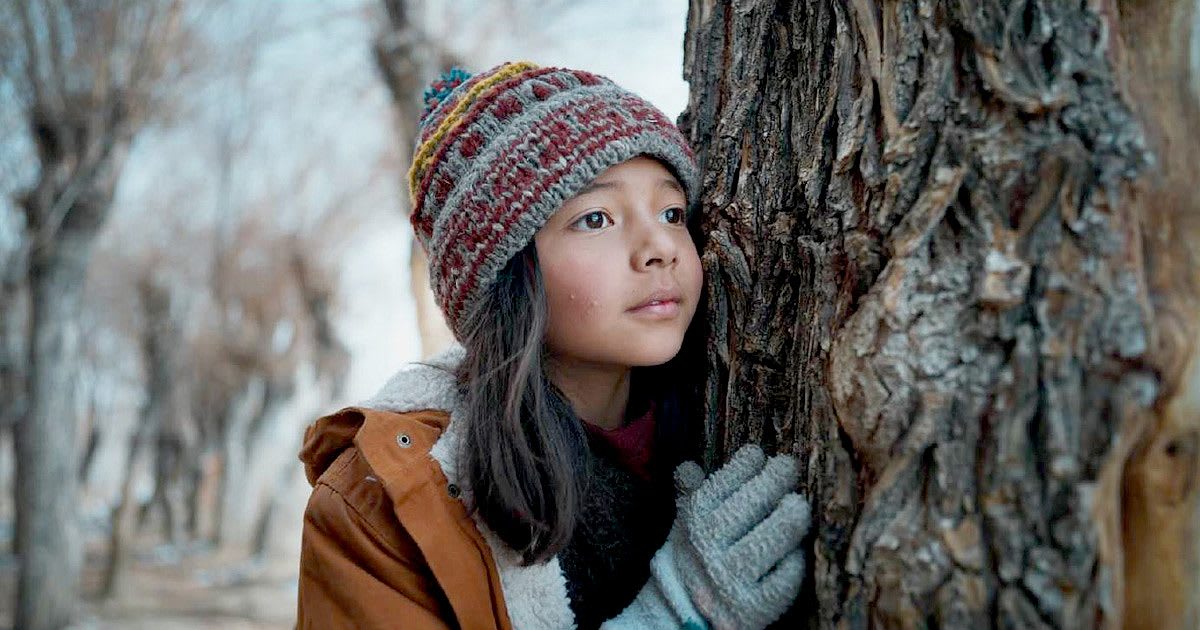
'When I bring up Birds On Ice, people think it is a documentary because there's no other fictional film set in the winters in Ladakh.'
You May Also Like
View All ›
Pakistan win tri-series final as Fakhar Zaman century denies Sri Lanka in thrilling chase - The Guardian

Electrolyte redesign unlocks tin's full charge capacity for flow batteries

Pakistan v Sri Lanka: tri-series cricket one-day international final – as it happened - The Guardian

How to watch Pakistan vs Sri Lanka ODI tri-series final 2026: free cricket live streams, team news, PAK need 326 to win - TechRadar
Loading comments…