
Thank you for visiting nature.com. You are using a browser version with limited support for CSS. To obtain the best experience, we recommend you use a more up to date browser (or turn off compatibility mode in Internet Explorer). In the meantime, to ensure continued support, we are displaying the site without styles and JavaScript.
Scientific Reports volume 16 , Article number: 38076 ( 2026 ) Cite this article
Intensive livestock production is associated with increased pressure on aquatic environments in agricultural landscapes. The occurrence of Haematococcus pluvialis in waters exposed to intensive livestock production was analysed in relation to selected physicochemical parameters. The study was conducted at two locations characterized by high livestock density and included precipitation, surface, groundwater, and well waters. The alga was detected in surface and precipitation waters, but was absent from groundwater. The occurrence of H. pluvialis was associated with moderately nutrient-enriched waters characterized by elevated conductivity and slightly alkaline pH. Elevated nutrient concentrations were recorded in waters influenced by intensive livestock production. The results suggest that H. pluvialis may represent a potential candidate indicator of aquatic environments exposed to intensive agricultural pressure. However, the observed relationships are associative rather than direct causal effects, and further studies are required to evaluate the broader indicator potential of this species under different environmental conditions.
Over the past decades, socio-economic development and the use of natural resources have intensified worldwide. The growing dominance of corporate structures in agriculture and food sector has driven resource exploitation to an unprecedented scale. In many regions, forests are being cleared to establish large monoculture plantations and industrial livestock farms, leading to habitat degradation and contamination of soils, surface waters, groundwater, and even rainwater. Intensive agricultural production systems may exert substantial pressure on aquatic and terrestrial ecosystems.
At the same time, increasing agricultural intensification has become an important source of environmental stress affecting aquatic ecosystems. Haematococcus pluvialis is a unicellular green microalga widely known for its ability to accumulate astaxanthin under environmental stress conditions. The species typically occurs in small, temporary water bodies such as rock pools, ephemeral ponds, and artificial containers, where it is exposed to fluctuating environmental conditions. Its life cycle includes motile green vegetative cells and non-motile cysts (aplanospores), which are resistant to adverse conditions such as desiccation, nutrient limitation, and high irradiance. The formation of red cysts rich in astaxanthin is a well-documented response to environmental stress, including high light intensity, nutrient imbalance, and other unfavorable conditions 1 , 2 . These traits suggest that the presence of H. pluvialis may be associated with specific physicochemical conditions and may reflect environmental stress in aquatic habitats. Despite its well-known physiological properties, the occurrence of H. pluvialis in rainwater and agricultural landscapes remains poorly documented, and its potential as an indicator species in such environments has not been systematically investigated.
During this same period of agricultural intensification observed in recent decades, small and medium-sized family farms, typically better adapted to local environmental conditions and exerting lower ecological pressure, have markedly declined 3 , 4 , 5 . High production concentration, particularly in the livestock sector, frequently leads to social conflicts, deteriorates the living conditions of surrounding communities, and negatively affects the health of humans as well as plant and animal populations 6 , 7 . These impacts are often accompanied by measurable changes in environmental quality, particularly in aquatic ecosystems exposed to agricultural pollution. Certain organisms can serve as environmental indicators, reflecting changes in habitat conditions and levels of degradation 8 .
Given the increasing pressure of intensive livestock production on aquatic ecosystems, the occurrence of Haematococcus pluvialis was analysed in relation to selected physicochemical parameters in different water bodies, including precipitation water, surface water, groundwater, and well water. Particular attention was paid to waters exposed to intensive agricultural pressure and to environmental conditions associated with the occurrence of the alga. The following hypotheses were tested:
The occurrence of H. pluvialis is associated with nutrient-enriched waters affected by intensive livestock production.
The occurrence of H. pluvialis is associated with specific physicochemical conditions, including pH and conductivity.
Two locations, F1 and F2, where Haematococcus pluvialis was observed, were selected for the study. Based on long-term research and monitoring (since 2002) concerning various aspects of aquatic environmental quality conducted across Poland, this alga was identified for the first time in 2018. According to local observations, episodes of coloured precipitation had also been reported in previous years.
Location F1 is a rural area situated in the Kujawsko–Pomorskie Voivodeship, within the outer intermediate protection zone of a surface water intake (from the Brda River) designated for domestic use, and within a protected landscape area. The surroundings of the site where H. pluvialis was recorded are characterized by typical agricultural and horticultural production.
Location F2 is a section of the Pogona River catchment. The distance from the river’s source to the site where the alga appeared is approximately 6.3 km in a straight line. This is a highly agricultural area dominated by conventional farming and with a substantial share of industrial livestock production. The core of the area is the Pogona River (surface water body: JCWP Pogona RW600017185629), covering 134.45 km 2 , classified as water vulnerable to pollution by agricultural nitrogen compounds. Additionally, the area is designated as a Nitrate Vulnerable Zone (NVZ), where the Action Programme under the Regulation of the Regional Water Management Authority in Poznań applies 9 .
Because H. pluvialis was recorded locally within a limited area, local sources of environmental pressure were considered particularly relevant. The survey covered areas extending several dozen kilometers in the case of heavy industry and several kilometers for other types of facilities. Particular attention was paid to enterprises capable of emitting significant amounts of biogenic compounds, as well as potassium, calcium, and sodium, because these elements may occur in livestock manure, slurry, feed materials, and agricultural dust emissions, and may therefore reflect the influence of intensive livestock production on surrounding environments. As H. pluvialis occurred only locally within a limited area, transboundary pollution from distant sources, which depends on multiple factors, was considered less likely.
For industrial livestock farms located within the study areas, the amount of produced manure was calculated according to the Regulation of the Council of Ministers of 12 February 2020 adopting the Action Programme aimed at reducing water pollution by nitrates from agricultural sources and preventing further pollution 10 . Additionally, ammonia emissions from livestock farms were estimated using the RAINS model (The Regional Air Pollution Information and Simulation), taking into account the different stages of production 11 .
For the calculation of emission indicators, annual average animal numbers were used. In the first stage, herd turnover over one year was calculated. Turnover animals are those that passed through a given production group during the year. The annual average refers to the mean number of animals in each production group over a 12-month period. Turnover animals at individual farms were calculated using the formulas presented in Table S1 .
The identification of Haematococcus pluvialis was based on microscopic observations of morphological features using a light microscope. The identification criteria included cell shape, size, the presence of biflagellated green vegetative cells, and the formation of red, non-motile cysts (aplanospores) rich in carotenoids, characteristic of the species. Observations were conducted on fresh samples collected from water bodies and rainwater.
Identification was based on standard taxonomic keys for freshwater microalgae 1 , 12 . Occurrence frequency was calculated as the percentage of samples in which H. pluvialis was detected relative to the total number of samples collected at each site.
Elements of small water retention, such as minor streams, surveyed at location F1 were dry for most of the year. Due to their temporary nature, water sampling from these features was not feasible. The nearby Brda River was not included in the analysis because its supra-regional character does not reflect local environmental conditions associated with the occurrence of Haematococcus pluvialis .
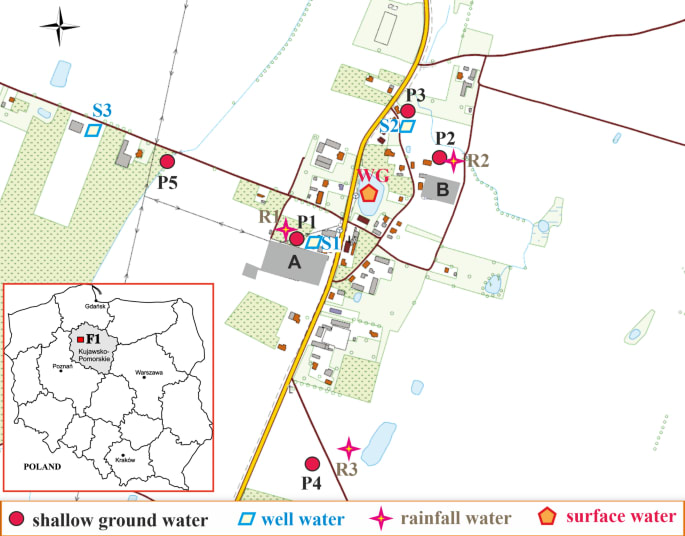
Within the village of F1, there is a pond covering approximately 0.382 ha (Fig. S1 ). Following rainfall, the pond water repeatedly turned red and, after approximately two weeks, shifted to green, suggesting intensive biological development within the pond. Consequently, water samples were collected from the pond (sampling point WG) (Fig. 1 ). Sampling was conducted seasonally (spring, summer, autumn, winter) from May 2020 to August 2021. The measured parameters included pH, conductivity, alkalinity, PO₄, total phosphorus (P total ), nitrite nitrogen (N-NO 2 ), nitrate nitrogen (N-NO 3 ), ammonium nitrogen (N-NH 4 ), organic nitrogen (N org ), total nitrogen (N total ), potassium (K), sodium (Na), and calcium (Ca). To provide a broader context for the interpretation of water quality at site WG, physicochemical data reported for small water bodies in Poland were compiled from the available literature. The compiled values, together with the corresponding references, are presented in Supplementary Material (Table S2 ) and were used as a comparative background for assessing the environmental conditions associated with the occurrence of H. pluvialis .
Location of monitoring points for rainwater, wells and piezometers in site F1: A—fattening pig farm; B—sow and piglet farm.
The study also included water samples collected from streams flowing through areas adjacent to large-scale livestock farms. The locations of the control points are shown in Fig. 2 . The investigated stream was the Pogona River, where two control points (PN1 and PN2) were established, along with its two unnamed tributaries (DP1 and DP2) (Fig. S2 ). Sampling was conducted from August 2020 to February 2022.
Location of surface, rainwater and well water intake points in location F2 in relation to nuisance facilities in the immediate vicinity: Farms: 1—american mink; 2—american mink; 3—broiler chickens; 4—broiler chickens; 5—chicken poultry; 6—chicken poultry; 7—pigs; 8—american mink and 9—plant producing feed.
Data from a nationwide river monitoring dataset were used as a reference background for comparative interpretation of physicochemical conditions observed at the study sites. The resulting distributions and reference ranges used for comparative interpretation are presented in Supplementary Material Tables S3 and S4 . The research covered 916 points located on 427 rivers throughout Poland, taking into account all ecoregions. Reference ranges were established based on threshold values for Classes I and II of ecological status according to Polish regulations implementing the EU Water Framework Directive 13 . The distribution of rivers across the established parameter ranges was subsequently analysed. The research was conducted in the years 2003–2015 as part of several research projects funded by the Ministry of Science and Higher Education, the State Committee for Scientific Research, and the 5th Framework Programme of the European Union (presented in Acknowledgment).
Groundwater sampling at location F1 was planned at five monitoring points (P1–P5). Two points were located in the immediate vicinity of livestock farms at locations A and B, two additional points were positioned 110 m away from locations A and B, and one point was placed in arable fields as a background reference (Fig. 1 ).
Groundwater samples were collected once per month between May 2020 and October 2021. After installing piezometers, a stabilization period of three weeks was allowed before sampling commenced. Measured parameters included pH, electrical conductivity, alkalinity, PO 4 , total phosphorus (P total ), nitrite nitrogen (N-NO 2 ), nitrate nitrogen (N-NO 3 ), ammonium nitrogen (N-NH 4 ), organic nitrogen (N org ), total nitrogen (N total ), potassium (K), sodium (Na), and calcium (Ca).
The study at locations F1 and F2 also included well water located within areas influenced by intensive livestock production (Figs. 1 and 2 ). Water for analysis was collected from the following wells:
These wells were located on private properties. Potential pressure from domestic and municipal activities was previously excluded. Sampling was conducted once per season (spring, summer, autumn, winter) at both locations. Only for well S3 at location F1 was sampling performed once, due to pump failures at the well owned by the property owner. Measured parameters included pH, electrical conductivity, alkalinity, PO 4 , total phosphorus (P total ), nitrite nitrogen (N-NO 2 ), nitrate nitrogen (N-NO 3 ), ammonium nitrogen (N-NH 4 ), organic nitrogen (N org ), total nitrogen (N total ), potassium (K), sodium (Na), and calcium (Ca).
At location F1, three rain gauges (R1, R2, R3) were installed to collect precipitation in the vicinity of livestock farm influence zones. Two rain gauges were positioned near the farms (R1 in the immediate vicinity of location A and R2 near location B), and one (R3) was located in a field approximately 720 m away from location A (Fig. 1 ). Water samples were collected from the rain gauges during significant rainfall events, on average once per month, between May 2020 and October 2021, at both F1 and F2 locations.
Precipitation collected at location F2 (R4) was also analysed. Due to the high density of intensive livestock facilities in the region (industrial livestock farms; 84 facilities established between 2010 and 2020), a single rainfall sampling point was designated at the site where H. pluvialis was observed in precipitation. This point was considered a central location reflecting pressure from surrounding livestock operations (Fig. 2 ).
National precipitation monitoring data were used as a reference dataset for evaluating the degree of enrichment of precipitation waters collected at the study sites. Reference values derived from the national precipitation monitoring dataset are presented in Supplementary Material Tables S5 and S6 . Rainfall monitoring points from the national monitoring network were selected for analysis in areas under relatively low pressure from agriculture and industry. Data were collected from annual reports prepared by the Institute of Meteorology and Water Management—National Research Institute 14 , 15 , 16 . The purpose of the analysis was to assess the physicochemical quality of precipitation across Poland between 2020 and 2022.
Due to the absence of quality standards for precipitation, the results of these analyses were used as a background reference for the present study. Data were analysed for the following locations: Świnoujście, Łeba, Suwałki, Zielona Góra, Śnieżka, Sandomierz, and Kasprowy Wierch. The selected sites represented different regions of Poland and areas under relatively low anthropogenic pressure.
The data included water quality parameters such as pH, electrical conductivity, ammonium nitrogen (N-NH 4 ), total nitrogen (N total ), total phosphorus (P total ), sodium (Na), potassium (K) and calcium (Ca). For each parameter, annual mean values were calculated from the annual averages at the analysed locations, along with the minimum and maximum values recorded during the year.
Temperature, pH, conductivity, and oxygen concentration were measured in situ at all sampling sites. Chemical parameters including nitrite nitrogen, nitrate nitrogen, ammonium nitrogen, total nitrogen, soluble reactive phosphates (SRP), total phosphorus, were analysed in laboratory using standard Hach-Lange methodology 17 . Organic nitrogen and total nitrogen were calculated using the Kjeldahl method. The measured physical and chemical parameters of water (alkalinity, potassium, calcium and sodium in that) quality and the methods of their determination are summarized in Table 1 .
The values of the analysed parameters were compared with the applicable standards 22 . In cases where no parameter-specific standard was available, the results were compared with the standard specified in the Regulation of the Ministry of Environmental Protection, Natural Resources and Forestry 23 . Standards for pH, Kjeldahl nitrogen, and calcium (Ca) were taken from the Regulation of the Ministry of Environment 9 .
For groundwater, including shallow and well water, comparisons were based on standards provided in the Regulation of the Ministry of Health 24 and the Regulation of the Ministry of Maritime Economy and Inland Navigation 25 . Additionally, standards from the Regulation of the Ministry of Maritime Economy and Inland Navigation 25 were used.
To examine the relationships between physicochemical parameters and the occurrence of Haematococcus pluvialis , non-parametric statistical analyses were performed. Differences between groups were evaluated using the Mann–Whitney U test, while relationships between physicochemical parameters and algal occurrence frequency were assessed using Spearman’s rank correlation coefficient 26 , 27 , 28 . For statistical analyses, H. pluvialis occurrence was expressed as occurrence frequency (%) at each sampling site, calculated as the proportion of samples in which the species was detected during the study period.
Multivariate relationships between physicochemical parameters and H. pluvialis occurrence were visualized using parallel coordinates plots 29 . All physicochemical variables were normalized to a 0–1 range using Min–Max normalization with scikit-learn’s MinMaxScaler. Data were transformed into long format for multidimensional visualization. Parallel coordinates plots were generated using the Seaborn library in Python 3.13.2, with line colors mapped to algal occurrence frequency. Correlation analysis and parameter distributions were further explored using Pair Plots (scatterplot matrices) 30 . These analyses were conducted on raw, non-normalized physicochemical data. A matrix of bivariate relationships was created, containing scatter plots (upper triangle) and histograms/KDE plots (diagonal), with algal occurrence frequency visually encoded through color mapping (hue parameter). This approach enabled identification of linear and non-linear correlations as well as clustering patterns related to the presence of H. pluvialis .
Within a radius of approximately 14 km from the site where H. pluvialis was recorded, no major industrial facilities potentially emitting substantial amounts of nutrients were identified. The surrounding area was dominated by agricultural and forested land, whereas intensive livestock production represented the main identifiable local source of environmental pressure. The F1 area is located near a legally protected landscape area comprising forests, lakes, and the Brda River valley.
At the village in F1, large-scale livestock production is present, which may influence the quality of both precipitation and groundwater. The farm is divided into two sections—A and B, separated by 232 m (Fig. 1 ). The farm specializes in pig breeding and rearing. Intensive pig production was conducted at locations A and B in F1. The livestock facilities, located within a built-up area, included pig breeding and fattening operations, feed infrastructure, and uncovered manure storage areas. Section B, covering 0.66 ha, contained two livestock buildings and an open manure plate of approximately 220 m 2 . About 70 m west of section B, there was a village pond with an area of approximately 0.38 ha, corresponding to the control sampling point WG. The maximum livestock load reached 613 LSU (livestock units), including breeding gilts, boars, and piglets. The calculated annual ammonia emission from both sections was 14,493.9 kg, with annual production of 4,092 t of manure and 2,312 m 3 of slurry.
The F2 area is located in the Greater Poland Voivodeship (Fig. 2 ). Approximately 4.7 km southeast of the precipitation recording site, there is a small town with a population of 13,854. Within a radius of approximately 3 km from the site where Haematococcus pluvialis was observed in precipitation, there are eight industrial livestock farms. The surrounding farms primarily rear American minks, broiler chickens, and pigs.
The F2 area was characterized by a high density of intensive livestock production, including mink, poultry, and pig farms. Annual manure production from mink farms ranged from 669 to 7,895 t, poultry farms generated between 947 and 13,855 t of litter annually, and pig production generated up to 13,627 m 3 of slurry per year. These facilities represented major local sources of environmental pressure. Detailed livestock production and ammonia emission data are presented in Table S7 .
Approximately 1.6 km east of the site where Haematococcus pluvialis was detected, a facility producing ready-made feed for livestock operates. The presence of H. pluvialis was recorded in the downstream section adjacent to this facility, at sampling point P1. Prior to this, despite repeated surveys conducted up to the source of the Pogona River, this alga had not been observed.
The available data suggest that livestock farms are the most likely local sources of pollution in the studied areas. However, the contribution of other diffuse or unrecognized sources cannot be entirely excluded. The impact of such facilities may involve short-term (episodic) exposure to high concentrations of pollutants or long-term (chronic) exposure to lower concentrations. In the case of large-scale industrial farms, simultaneous exposure to multiple air pollutants is commonly observed (synergistic effects) 31 . Airborne pollutants originating from intensive livestock production may contribute to the contamination of surface waters, groundwater, and precipitation 32 , 33 .
Due to the lack of water in the streams flowing through location F1 caused by hydrological drought in Poland, water was collected from a pond situated in the central part of the village as a component of surface waters (point WG). Until recently, such water bodies were often treated as recipients of wastewater. The studied village in F1 is connected to a sewage system, and therefore no domestic wastewater is discharged directly into the pond. Despite this, the pond showed elevated nutrient concentrations and physicochemical characteristics indicating substantial anthropogenic pressure. High pH and very high conductivity classified these waters as beyond-class (non-classified). According to Polish standards 22 , this water body can be classified as a calcareous-based, low Schindler coefficient, polymictic reservoir (WSm_b).
Maximum conductivity at point WG for occasionally exceeded the threshold for good ecological status (Class II) by up to 4.9 times (Table 2 ). The corresponding thresholds were exceeded by up to 26.4-fold for total nitrogen and 40.9-fold for total phosphorus. High concentrations of total nitrogen and total phosphorus suggest significant anthropogenic pressure on this water body. The nearby pig farm likely represents an important local source of nitrogen and phosphorus, as there are no other industrial facilities in the vicinity that could adversely affect the pond. The slope of the terrain from farm B to the pond determines the direction of pollutant runoff. Studies conducted by the Regional Municipal Management Plant detected E. coli bacteria in the basement of a residential building located between farm B and the pond in 2018, resulting from manure seepage. Rainwater also flows into the pond, which, as indicated by preliminary analyses, is highly nutrient-rich.
Analysis of individual water quality parameters in the pond (point WG) revealed elevated conductivity (1.339 mS/cm⁻ 1 ) and high concentrations of ammonium nitrogen (2.13 mg/L⁻ 1 ), total nitrogen (10.4 mg/L⁻ 1 ), and total phosphorus (0.67 mg/L⁻ 1 ), as well as K, Ca, and Na, compared with values reported for many small and medium retention water bodies in Poland (Tables 2 and S2 34 ;). These physicochemical characteristics are consistent with substantial anthropogenic transformation of the pond environment.
To assess the degree of degradation of the studied riverine habitats, the values of the analysed parameters at points PN1, DP1, PN2, and DP2 on the Pogona River were compared with results obtained for a wide gradient of rivers in Poland. Analysis of mean values for ammonium nitrogen, total nitrogen, total phosphorus, nitrate nitrogen, and phosphates (except for point PN1) shows that they fall within the ranges of maximum concentrations recorded in Poland corresponding to class X of the established scale (Tables 2 and S3 ). pH values fall within class VI for all points, whereas conductivity falls within class VIII (points PN1, DP1, and PN2) and class IX (point DP2, where H. pluvialis was not detected). Water quality results for the Pogona River suggest substantial deviations from the mean water quality of rivers in Poland (Tables 2 and S4 ), supporting that habitats where H. pluvialis was recorded are extremely polluted.
It is also worth noting that for almost all parameters at point DP2, values were repeatedly higher than those previously recorded along a broad gradient of rivers in Poland (Tables 2 and S3 ). Total nitrogen, in all studied points along the Pogona River, showed concentrations exceeding the maximum values reported for other river stretches in Poland (Table S4 ). All analysed parameters exceeded permissible standards for good status (Class II) when considering mean values. It is also important to mention that the Pogona River is particularly vulnerable to nitrate pollution from agriculture, and nitrogen emissions should be reduced in accordance with the EU Nitrates Directive 35 . However, water quality in tributaries DP1 and DP2 indicates severe nitrate contamination. Recorded maximum values of the analysed parameters significantly exceeded permissible standards for good ecological status, particularly for phosphates, total phosphorus, ammonium nitrogen, and total nitrogen (Table S8 ). These values indicate very high levels of pollution and suggest strong anthropogenic pressure on the studied water bodies.
The frequency of Haematococcus pluvialis occurrence in surface waters depended on the sampling point (Table 2 ). At point PN1, the alga was recorded in 100% of samples, making this location key for identifying conditions linked to its occurrence. At points DP1 and WG, the frequency of algal occurrence was 50%. At PN2, the alga was observed less frequently (25% occurrence). No H. pluvialis was recorded at point DP2, despite its proximity to the R4 rainfall sampling site, where the alga frequently appeared. Point DP2 served as a control to illustrate differences compared to other surface water sampling locations and to assess whether selected physicochemical conditions were associated with algal occurrence.
Comparison of mean parameter values revealed differences between samples where the alga was present (PN1, DP1, PN2, WG) and those where it was absent (DP2). Several parameters showed clear contrasts between these groups. In PN1 (100% occurrence), moderate concentrations of phosphates (PO 4 ) and nitrates (NO 3 ) were observed, but ammonium nitrogen (NH 4 ) concentrations were high. At DP2 (0% occurrence), concentrations of phosphates, nitrates, and ammonium nitrogen were the highest, suggesting that extremely high nutrient concentrations may be less favourable for algal occurrence. This pattern suggests that H. pluvialis is associated with moderately enriched conditions rather than with extreme nutrient concentrations. Similar observations have been reported previously, as H. pluvialis is commonly found in small aquatic habitats characterized by fluctuating environmental conditions rather than in highly polluted waters 1 , 2 . At WG (pond, 50% occurrence), parameter values were similar to those at PN1, but pH was higher (Table 2 ).
Spearman correlation analyses suggested weak associations between selected physicochemical parameters and H. pluvialis occurrence frequency in surface waters (Table S9 ). Positive relationships were observed for pH, whereas negative relationships were observed for conductivity, phosphate, nitrate, and ammonium nitrogen concentrations. Mann–Whitney U tests comparing sites with and without H. pluvialis occurrence indicated trends toward differences in nitrate and ammonium nitrogen concentrations; however, these differences did not reach statistical significance (Table S10 ).
H. pluvialis occurrence was associated with nutrient-enriched waters affected by intensive livestock production. The highest frequency of occurrence was observed at moderate rather than extremely high nutrient concentrations. At PN1 and WG, where the alga occurred most frequently, phosphate concentrations ranged from 0.76 to 1.05 mg/L⁻ 1 and nitrate nitrogen concentrations from 0.41 to 7.6 mg/L⁻ 1 . In contrast, at DP2, where the alga was absent, phosphate and nitrate nitrogen concentrations reached 9.01 and 20.4 mg/L⁻ 1 , respectively. The distribution of phosphate concentrations (PO 4 ) in the analysed samples is presented in Fig. S3 .
H. pluvialis occurrence was associated with slightly alkaline waters (pH 7.5–8.5) and conductivity values in the range of 1.0–1.5 mS/cm⁻ 1 (Fig. 3 ). Similar environmental conditions have been reported in previous studies of H. pluvialis . The species is commonly associated with small water bodies characterized by neutral to slightly alkaline pH and variable environmental conditions 1 , 2 , 36 . The pH range observed in the present study is therefore consistent with previously reported ecological preferences of this species.
The influence of pH, conductivity and phosphates in surface waters on the occurrence of H. pluvialis.
The quality of shallow subsurface waters may reflect the influence of agricultural activities, including livestock production, fertilization, and manure storage. Although no occurrence of Haematococcus pluvialis was recorded in groundwater or well water at the studied locations, these waters were analysed to characterize physicochemical conditions under agricultural pressure and to compare them with surface waters. The absence of the alga in groundwater and well water may be associated with limited light availability, filtration processes in soil, and physicochemical conditions differing from those in surface waters. Waters occurring at the Q0 level are particularly susceptible to contamination from anthropogenic sources. Waters occurring at the Q0 level are particularly susceptible to contamination from anthropogenic sources.
Analysing the results of groundwater from piezometers in location F1, the highest values of most parameters were recorded at point P1, located near the fattening pig farm (Table 3 ). Due to the absence of other potential pollution sources in this area, the livestock farm likely represented an important local source of contamination. The recorded values differed substantially from groundwater quality ranges reported in national monitoring and literature data. The highest maximum values for several parameters were also recorded at points P1 and P2 (Table S11 ). In contrast, at point P4, the lowest mean values were recorded for most parameters (pH, conductivity, alkalinity, nitrite nitrogen, nitrate nitrogen, total nitrogen, and calcium).
Elevated nitrate concentrations were observed in the studied groundwater. Elevated concentrations of total phosphorus, total nitrogen, and potassium were observed particularly at points P1 and P2 compared with national monitoring data (Tables 3 and S12 ), suggesting substantial anthropogenic pressure.
Among the analysed wells, the highest mean values of the studied parameters were observed in well S1 (Table 4 ). The majority of parameters in S1 deviated from the results obtained in other wells, except for calcium, whose concentrations were significantly higher in wells S2–S5. The highest mean concentrations of total phosphorus and total nitrogen were observed in well S2. The terrain slope promotes the migration of biogenic compounds, and well S2 is located just downstream of this slope from the farm. Potassium concentrations in well S1 were sometimes up to 18 times higher than in the other wells and also exceeded the mean values reported in the national literature and monitoring data (Tables 4 and S13 ). Elevated potassium concentrations may reflect the influence of livestock production and manure storage.
Conductivity, phosphorus compounds, and ammonium nitrogen concentrations in several wells exceeded values reported in national monitoring data and selected literature reports (Tables 4 and S13 37 ;). The physicochemical characteristics of wells S1 and S2 may indicate long-term infiltration of pollutants into deeper groundwater layers.
Compared with surface waters, groundwater and well waters generally showed lower concentrations of phosphates, nitrates, and ammonium nitrogen. The minimum and maximum values of the analysed parameters in well waters are presented in Table S14 .
The absence of H. pluvialis in both groundwater and well water may be associated with limited light availability, filtration processes in soil, and physicochemical conditions differing from those in surface waters.
The quality of precipitation may reflect local environmental conditions and atmospheric deposition of pollutants. Intensive livestock production is associated with the emission of numerous compounds, particularly nitrogen compounds, which may influence ecosystem functioning and water quality.
The presence of algae in both rainwater and surface water suggests a potential local source of contamination. The observations suggest the possible influence of local emission sources. The presence of algae in rainwater is unusual but not unprecedented. It may result from the transport of algal cells or cysts via atmospheric processes, including wind dispersal and aerosolization. However, the relatively high frequency of occurrence observed in this study suggests the presence of local sources contributing to this phenomenon. Algae are used as a component of animal dietary supplements, as an additive to fish feed, and, to a lesser extent, poultry feed 38 , 39 . A nearby feed production facility may represent one potential source of the algae. However, the exact source of H. pluvialis could not be unequivocally confirmed and requires further investigation.
Comparing the studied points, some differences can be observed. The highest values for almost all analysed parameters were recorded at point R2. At point R1, on the other hand, the highest concentrations of potassium and calcium were observed. Ammonium nitrogen (N-NH 4 ) concentrations were at similar levels at points R1–R3. At point R4, ammonium nitrogen concentrations in precipitation were about half as high. The highest phosphate concentrations in rainwater were recorded at points R2 and R3 (Table 5 ).
Comparison with national precipitation monitoring data for clean and moderately transformed areas in Poland showed that several analysed parameters exceeded the reported values (Tabs. S5 and S15 ), indicating substantial nutrient enrichment of precipitation waters in the studied locations.
Rainwater in locations F1 and F2 was characterized by high concentrations of ammonium nitrogen, potassium, calcium, sodium, and phosphorus compounds compared with national monitoring data for less transformed areas in Poland (Tables 5 , S5 , S6 , and S15 ). The obtained results suggest substantial nutrient enrichment of precipitation waters and possible influence of local agricultural emission sources.
Conductivity values were also higher than those reported in national monitoring data, while maximum values of selected parameters were high for this type of water (Table S15 ). Overall, the results indicate substantial transformation of precipitation quality in the studied locations.
Rainfall analysis included both physicochemical and biological parameters. The coloration of precipitation also suggests water contamination. Due to the observed red-colored precipitation in the area, collected samples were analysed for the presence of algae. The precipitation color ranged from gray (sewage-like odor and color—R2) to pink (R1), red (R1, R4), yellow (R3), greenish-yellow (R3), and green (R1, R2, R3, R4) (Fig. 4 ). Analysis of the conditions (e.g., absence of industry) and the fact that the precipitation turned green after a few days suggested a biological origin of the coloration. The color change may reflect algal development under nutrient-rich conditions, as such nutrient-rich habitats are ideal for their development.
Water color under the influence of Haematococcus pluvialis : A—one-day precipitation in location F2; B—one-week precipitation in location F2; C—pink-colored precipitation at point R1 and green-colored surface water from pond W in location F1; D—pink-colored precipitation at point R1; E–H—color of rain and snow precipitation at point R1 in location F1.
Biological analysis were also conducted on water from the pond (WG) in location F1 and water from points on the Pogona River (PN1, PN2, D1, and D2). At point PN1, a red color of sediments and supernatant water was observed, with the crimson-red color persisting throughout the study period. Water samples revealed the presence of the rare alga Haematococcus pluvialis , a freshwater green microalga that produces the red carotenoid astaxanthin under stress (Fig. 5 ). The red coloration observed in precipitation and surface waters is likely associated with the accumulation of astaxanthin under stress conditions.
H. pluvialis in precipitation in area F1: A—R1; B—R2; C—R3.
Although Haematococcus pluvialis is not commonly reported in aquatic environments in Poland, its occurrence may be under-documented, particularly in ephemeral or small water bodies. Occurrences of red-colored precipitation associated with algae are rarely reported worldwide. Cases involving H. pluvialis were described in Spain in 2014, whereas other “blood rain” events reported from India and Sri Lanka were associated with algae of the genus Trentepohlia . In Poland, red precipitation has previously been linked mainly to Saharan dust transport.
Multivariate visualization of surface and precipitation waters based on normalized physicochemical data indicated general patterns differentiating samples with high and low occurrence of H. pluvialis (Fig. 6 ). Samples with high algal occurrence tended to be associated with moderately elevated concentrations of nitrogen compounds, slightly alkaline pH, and lower phosphate concentrations compared with samples where the alga was absent. In contrast, samples without H. pluvialis tended to show higher concentrations of selected nitrogen compounds, particularly ammonium nitrogen.
Parallel coordinates plots for the influence of selected parameters on the occurrence of H. pluvialis in surface and precipitation waters.
Pairwise plots of physicochemical parameters illustrated patterns consistent with the relationships observed in previous sections. These descriptive patterns were also consistent with the correlation structure observed in the combined dataset (Fig. S4 ). Higher occurrence of H. pluvialis was associated with moderately elevated nutrient enrichment, and slightly alkaline pH conditions (approximately 7.0–8.5). In contrast, extremely high nutrient concentrations, particularly ammonium nitrogen reaching 59.15 mg/L⁻ 1 , coincided with the absence of the alga.
Phosphate concentrations at which the alga was observed range from 0.09 to 10.25 mg/L -1 . In samples with higher phosphate concentrations (e.g., 9.01–10.25 mg/L -1 ), algal occurrence is lower, suggesting that very high phosphate levels may be associated with reduced algal presence. In contrast, higher occurrence was observed at moderate concentrations (1.05–3.57 mg/L -1 ). Nitrate nitrogen concentrations range from 0.41 to 20.7 mg/L -1 . In samples with higher nitrate concentrations (12.7–20.7 mg/L -1 ), algal occurrence was lower, whereas higher occurrence was observed at lower concentrations (0.41–1.8 mg/L -1 ). Ammonium nitrogen concentrations range from 0.67 to 59.15 mg/L -1 . In samples with very high concentrations (59.15 mg/L -1 ), algal occurrence was not observed, suggesting that such levels may be inhibitory or potentially toxic. In contrast, higher occurrence was observed at moderate concentrations (2.131–12.75 mg/L -1 ). Correlation analysis suggested associations between nutrient concentrations and algal occurrence, particularly for ammonium nitrogen, nitrates, and phosphates.
Overall, the results indicate that H. pluvialis occurrence was associated with moderately elevated nutrient concentrations and slightly alkaline conditions. The absence of the alga at extremely high nutrient levels suggests that its occurrence may reflect intermediate rather than the most heavily transformed environmental conditions. The observed relationships suggest that H. pluvialis may have potential as an indicator of transformed aquatic environments; however, the identified relationships remain correlative and require further investigation.
The obtained results provide partial support for Hypothesis 1, which assumed that the occurrence of H. pluvialis is associated with nutrient-enriched waters affected by intensive livestock production. The species was most frequently recorded in waters characterized by elevated nutrient concentrations and exposed to agricultural pressure; however, its occurrence was reduced or absent under extremely high nutrient levels. The results also support Hypothesis 2, indicating that the occurrence of H. pluvialis was associated with specific physicochemical conditions, particularly slightly alkaline pH and elevated conductivity. These findings suggest that H. pluvialis may represent a potential candidate indicator of transformed aquatic environments, although the observed relationships remain correlative and require further verification under a broader range of environmental conditions.
The conducted analyses of surface waters, groundwater, well water, and precipitation indicate substantial anthropogenic transformation of the studied environments. The obtained results suggest that intensive livestock production and associated agricultural activities may represent important local sources of nutrient pollution affecting water quality in the studied areas.
The analysed waters were characterized by high concentrations of biogenic compounds, particularly nitrogen and phosphorus forms, indicating strong nutrient enrichment likely associated with agricultural pressure.
In addition to the potential source of H. pluvialis , specific environmental conditions associated with its occurrence were identified. The alga was not recorded in groundwater or well water. This may be associated with limited light availability and different environmental conditions compared with surface waters.
The occurrence of H. pluvialis was associated with moderately nutrient-enriched waters and slightly alkaline conditions. The highest frequency of occurrence was observed at pH values of approximately 7.7–8.5, nitrate nitrogen concentrations of approximately 0.4–7.6 mg/L⁻ 1 , ammonium nitrogen concentrations of approximately 2.1–12.8 mg/L⁻ 1 , and moderate phosphate concentrations. Extremely high nutrient concentrations appeared to coincide with reduced occurrence of the alga.
The datasets generated and/or analyzed during the current study are not publicly available in full due to confidentiality agreements with private landowners and intellectual property restrictions related to data collected within other research projects. Fieldwork conducted on private properties (ground and well water) was carried out with informed consent, and location-specific information has been anonymized to protect landowner privacy. The Author has the necessary consents signed by the owners of private land available to the Editor due to the sensitive data. Anonymized datasets supporting the findings of this study are available from the corresponding author upon reasonable request and subject to appropriate data use agreements.
Boussiba, S. Carotenogenesis in the green alga Haematococcus pluvialis : Cellular physiology and stress response. Physiol. Plant. 108 , 111–117. https://doi.org/10.1034/j.1399-3054.2000.108002111.x (2000).
Shah, M. M. R., Liang, Y., Cheng, J. J. & Daroch, M. Astaxanthin-producing green microalga Haematococcus pluvialis : From single cell to high value commercial products. Front. Plant Sci. 7 , 531. https://doi.org/10.3389/fpls.2016.00531 (2016).
Article PubMed PubMed Central Google Scholar
Altieri, M.A. Agroecology: The science of sustainable agriculture. Agroforest Syst. Westview Press. 35, 111–115. https://doi.org/10.1007/BF02345332
de Oliveira, R. E., de Magalhães, L. P., Gallo, A. D., de Oliveira, J. A. & Sais, A. C. Land use transitions and the decline of family farming in Southeastern Brazil: Patterns, pressures, and environmental trade-offs. Land Use Policy https://doi.org/10.1016/j.landusepol.2025.107802 (2025).
van der Ploeg, J. D. & Long, A. The peasantries of the twenty-first century. In The New Peasantries: Struggles for Autonomy and Sustainability in an Era of Empire and Globalization (eds van der Ploeg, J. D. & Long, A.) 1–17 (Earthscan, 2012). https://doi.org/10.4324/9781849773164 .
FAO. The state of the world’s land and water resources for food and agriculture – Systems at breaking point (Synthesis report, 2021). https://doi.org/10.4060/cb7654en .
UNEP. Food systems and natural resources. United Nations Environment Programme. (2016) https://www.resourcepanel.org/reports/food-systems-and-natural-resources .
Siddig, A. A. H., Ellison, A. M., Ochs, A., Villar-Leeman, C. & Lau, M. K. How do ecologists select and use indicator species to monitor ecological change? Insights from 14 years of publication in Ecological Indicators. Ecol. Indic. 60 , 223–230. https://doi.org/10.1016/j.ecolind.2015.06.036 (2016).
Rozporządzenie Dyrektora RZGW w Poznaniu. Rozporządzenie Dyrektora Regionalnego Zarządu Gospodarki Wodnej w Poznaniu z dnia 28 lutego 2017 r. w sprawie określenia w regionie wodnym Warty wód powierzchniowych i podziemnych wrażliwych na zanieczyszczenie związkami azotu ze źródeł rolniczych oraz obszaru szczególnie narażonego, z którego odpływ azotu ze źródeł rolniczych do tych wód należy ograniczyć(Dz.Urz. woj.. wielkopolskiego, Poz. 1638). (2017).
Rozporządzenie RM. Rozporządzenie Rady Ministrów z dnia 12 lutego 2020 r. w sprawie przyjęcia "Programu działań mających na celu zmniejszenie zanieczyszczenia wód azotanami pochodzącymi ze źródeł rolniczych oraz zapobieganie dalszemu zanieczyszczeniu" (Dz.U. 2020 poz. 243). (2020).
Klimont Z. & Brink C. Modelling of emissions of air pollutants and greenhouse gases from agricultural sources in Europe. I nterim Report. IIASA. Austria. https://pure.iiasa.ac.at/id/eprint/7400/1/IR-04-048.pdf (2004).
Oslan, S. N. H. et al. A review on Haematococcus pluvialis bioprocess optimization of green and red stage culture conditions for the production of natural astaxanthin. Biomolecules 11 (2), 256. https://doi.org/10.3390/biom11020256 (2021).
Article PubMed PubMed Central CAS Google Scholar
European Parliament & Council of the European Union. Directive 2000/60/EC establishing a framework for Community action in the field of water policy. Off. J. Eur. Communities L 327 , 1–73 (2000).
IMGW-PIB. Monitoring chemizmu opadów atmosferycznych i ocena depozycji zanieczyszczeń do podłoża w latach 2021–2022. Raport roczny z badań w 2020 r. Warszawa. 488. (2021).
IMGW-PIB. Monitoring chemizmu opadów atmosferycznych i ocena depozycji zanieczyszczeń do podłoża w latach 2021–2022. Raport roczny z badań w 2021 r. Warszawa. 493. (2022).
IMGW-PIB. Monitoring chemizmu opadów atmosferycznych i ocena depozycji zanieczyszczeń do podłoża w 2023 roku. Raport roczny z badań w 2022 r. Warszawa. 151. (2023).
Hach Lange GmbH. DR 3900 Spectrophotometer User Manual. (Hach Lange, 2013).
Dojlido, J., Dożańska, W. & Hermanowicz, W. Fizyczno-chemiczne badanie wody i ścieków [Physico-chemical testing of water and sewage] Vol. 2, 558 (Wyd. Arkady, 1999).
Skoog, D.A., Holler, F.J., Stanley, R., Crouch S.R. Principles of Instrumental Analysis: An introduction 7th ed. ISBN-13: 978-1305577213, 961. (2021) https://alraziuni.edu.ye/uploads/pdf/Douglas-A.-Skoog-F.-James-Holler-Stanley-R.-Crouch-Principles-of-Instrumental-Analysis-Cengage-Learning-2016.pdf .
Kenny, A. D. & Cohn, V. H. Complexometric titration of calcium in presence of magnesium. Anal. Chem. 30 (8), 1366–1368. https://doi.org/10.1021/ac60140a022 (1958).
Speight, J. Lange’s Handbook of Chemistry, Seventeenth Edition. McGraw-Hill Education, 1312. (2016).
Rozporządzenie Ministra Infrastruktury z dnia 25 czerwca 2021 r. w sprawie klasyfikacji stanu ekologicznego, potencjału ekologicznego i stanu chemicznego oraz sposobu klasyfikacji stanu jednolitych części wód powierzchniowych, a także środowiskowych norm jakości dla substancji priorytetowych (Dz.U. Warszawa, dnia 13 sierpnia 2021 r. Poz. 1475). (2021). https://isap.sejm.gov.pl/isap.nsf/DocDetails.xsp?id=WDU20210001475 .
Rozporządzenie MOŚZNiL. Rozporządzenie Ministra Ochrony Środowiska, Zasobów Naturalnych i Leśnictwa z 5 listopada 1991 r. w sprawie klasyfikacji wód oraz warunków jakimi powinny odpowiadać ścieki wprowadzane do wód lub do ziemi (Dz.U. 1991 nr 116 poz. 503). (1991) https://isap.sejm.gov.pl/isap.nsf/DocDetails.xsp?id=WDU19911160503 .
Rozporządzenie MZ. Rozporządzenie Ministra Zdrowia z dnia 7 grudnia 2017 r. w sprawie jakości wody przeznaczonej do spożycia przez ludzi (Dz.U. 2017 poz. 2294). (2017) https://isap.sejm.gov.pl/isap.nsf/DocDetails.xsp?id=WDU20170002294 .
Rozporządzenie MGMiŻŚ. Rozporządzenie Ministra Gospodarki Morskiej i Żeglugi Śródlądowej z dnia 11 października 2019 r. w sprawie kryteriów i sposobu oceny stanu jednolitych części wód podziemnych (Dz.U. 2019 poz. 2148). (2019a) https://isap.sejm.gov.pl/isap.nsf/DocDetails.xsp?id=WDU20190002148 .
Pan, S. et al. Using the Pearson’s correlation coefficient as the sole metric to measure the accuracy of quantitative trait prediction: is it sufficient?. Front. Plant Sci. https://doi.org/10.3389/fpls.2024.1480463 (2024).
Schober, P., Boer, C. & Schwarte, L. A. Correlation coefficients: Appropriate use and interpretation. Anesth. Analg. 126 (5), 1763–1768. https://doi.org/10.1213/ANE.0000000000002864 (2018).
Takiar, R. The validity of t-test, Mann-Whitney test and Z test for testing significant differences between two sample means when sample size is 10 or below. Bull. Math. Stat. Res. 11 (2), 1–15. https://doi.org/10.33329/bomsr.13.1.1 (2023).
Inselberg, A. The plane with parallel coordinates. Vis. Comput. 1 , 69–91. https://doi.org/10.1007/BF01898350 (1985).
Wickham, H. 2016. ggplot2: Elegant Graphics for Data Analysis. Springer-Verlag, New York. https://doi.org/10.1007/978-3-319-24277-4_9
Batterman, S., Grant-Alfieri, A. & Seo, S. H. Low level exposure to hydrogen sulfide: A review of emissions, community exposure, health effects, and exposure guidelines. Crit. Rev. Toxicol. 53 (4), 244–295. https://doi.org/10.1080/10408444.2023.2229925 (2023).
EEA. Impacts of air pollution on ecosystems in Europe. Web report no. 22/2024 EN HTML: TH-01-24-022-EN-Q. (2024) https://doi.org/10.2800/9670592 .
Walker, J., Beachley, G., Helen, A., Baron, J., Bash, J., Baumgardner, R., Bell, M., Benedict, K., Chen, X., Clow, D., Cole, A., Coughlin, J., Cruz, K., Daly, R., Decina, S., Elliott, E., Fenn, M., Ganzeveld, L., Gebhart, K., Isil, S., Kerschner, B., Larson, B., Lavery, T., Lear, G., Macy, T., Mast, A., Mishoe, K., Morris, K., Padgett, P., Pouyat, R., Puchalski, M., Pye, H., Rea, A., Rhodes, M., Rogers, C., Saylor, R., Schichtel, B., Schwede, D., Sexstone, G., Sive, B., Templar, P., Thompson, T., Tong, D., Wetherbee, G., Whitlow, T., Wu, Z., Yu, Z., Zhang, L. Science needs for continued development of total nitrogen deposition budgets in the United States. U.S. Environmental Protection Agency, Office of Research and Development, National Center for Environmental Assessment, Washington, (2019) DC, EPA/600/R-18/383.
Gałczyńska, M., Gamrat, R. & Pacewicz, K. Influence of different uses of the environment on chemical and physical features of small water ponds. Pol. J. Environ. Stud. 20 (4), 885–894 (2011).
Council of the European Communities. Council Directive 91/676/EEC concerning the protection of waters against pollution caused by nitrates from agricultural sources. Off. J. Eur. Communities L 375 , 1–8 (1991).
Ettl, H. Chlorophyta I: Phytomonadina. In Süßwasserflora von Mitteleuropa Vol. 9 (eds Ettl, H. et al.) (Gustav Fischer Verlag, Stuttgart, 1983).
Pawęska, K., Malczewska, B. & Zyglińska, B. Zawartość fosforanów w wodach studziennych na przykładzie wsi Przeździedza [Phosphate content in well water on the example of the village of Przeździedza]. Infrastructure and Ecology of Rural Areas. Wyd PAN, Kraków. 7 , 169–177 (2011).
Cerezal-Mezquita, P. et al. Physical-chemical characteristics of Red Meal a novel non-defatted additive in the fish feed from cracked biomass of Haematococcus pluvialis. Animal Feed Sci. Technol. 285 , 115247. https://doi.org/10.5281/zenodo.14777949 (2022).
Saadaoui, I. et al. Microalgal-based feed: Promising alternative feedstocks for livestock and poultry production. J Anim. Sci. Biotechnol. 12 (1), 76. https://doi.org/10.1186/s40104-021-00593-z (2021).
The work partially uses data regarding water quality in Poland from research projects: (a) Ministry of Science and Higher Education No. N N305 372238, 2010–2011, entitled “A system for rapid identification of farms for the assessment of water quality risks in areas particularly exposed to nitrates from agricultural sources and in regions of intensive agricultural production”; (b) Project under the 5th Framework Programme of the European Union No. EVK1-CT-2001-00089, 2003–2005, entitled “Standardization of river classification systems: A framework for calibrating the results of biological river quality assessment for ecological classification in line with the requirements of the European Union Water Framework Directive”; (c) Project of the State Committee for Scientific Research No. 2 P06S 019 27; 2004–2006, entitled "The influence of ecomorphological conditions of river valleys on the structure of aquatic vegetation at different trophic levels". The publication was financed by the Polish Minister of Science and Higher Education as part of the Strategy of the Poznan University of Life Sciences for 2024-2026 in the field of improving scientific research and development work in priority research areas. (d) The publication was financed by the Polish Minister of Science and Higher Education as part of the Strategy of the Poznan University of Life Sciences for 2024-2026 in the field of improving scientific research and development work in priority research areas.
Department of Ecology and Environmental Protection, Poznań University of Life Sciences, Piątkowska Street 94C, 60-649, Poznań, Poland
Search author on: PubMed Google Scholar
J.M.K.: conceptualization, methodology, investigation, formal analysis, visualization, resources, validation, writing—original draft, writing—review and editing, funding acquisition.
Correspondence to Jerzy Mirosław Kupiec .
The authors declare no competing interests.
Springer Nature remains neutral with regard to jurisdictional claims in published maps and institutional affiliations.
Below is the link to the electronic supplementary material.
Open Access This article is licensed under a Creative Commons Attribution-NonCommercial-NoDerivatives 4.0 International License, which permits any non-commercial use, sharing, distribution and reproduction in any medium or format, as long as you give appropriate credit to the original author(s) and the source, provide a link to the Creative Commons licence, and indicate if you modified the licensed material. You do not have permission under this licence to share adapted material derived from this article or parts of it. The images or other third party material in this article are included in the article’s Creative Commons licence, unless indicated otherwise in a credit line to the material. If material is not included in the article’s Creative Commons licence and your intended use is not permitted by statutory regulation or exceeds the permitted use, you will need to obtain permission directly from the copyright holder. To view a copy of this licence, visit http://creativecommons.org/licenses/by-nc-nd/4.0/ .
Kupiec, J.M. Environmental conditions associated with the occurrence of Haematococcus pluvialis in agricultural landscapes affected by intensive livestock production farming. Sci Rep 16 , 38076 (2026). https://doi.org/10.1038/s41598-026-59082-w
Version of record : 16 November 2026
DOI : https://doi.org/10.1038/s41598-026-59082-w
Anyone you share the following link with will be able to read this content:
Sorry, a shareable link is not currently available for this article.
Provided by the Springer Nature SharedIt content-sharing initiative
© 2026 Springer Nature Limited



Loading comments…