

World Test Championship set to stay nine-team contest till 2031
‘Cricket reforms wouldn’t have happened if not for AKD’ – Wettimuny
Lihini wins Girls Under 18 Hard Court singles title
Aaron’s six wickets help S. Thomas’ take first innings lead
Matt Henry six-for and Will Young hundred crush India
The Sri Lanka Railways Department has issued a special circular prohibiting officials and employees from using social media during duty hours and sharing sensitive information related to railway operations.
The move follows observations that certain railway officials had been sharing sensitive operational information on social media while on duty.
According to the circular, railway employees are prohibited from posting information relating to railway operations, internal decisions or official documents on social media from train control rooms, engine control rooms, workshops or any other railway premises.
The circular further stipulates that only the General Manager of Railways, the Railway Spokesperson and the Information Officer are authorised to provide official railway information to external parties or the media.
All News Advertisement Related Topics: Up Next Police probe ‘drug-planting’ allegations against cops
Badowita Asanka associate arrested in anti-drug raid
Your email address will not be published. Required fields are marked *
Save my name, email, and website in this browser for the next time I comment.
Prime Minister Dr. Harini Amarasuriya stated that one of the Government’s key objectives is to ensure economic democracy by making entrepreneurship a driving force in the country’s economic growth and national development.
The Prime Minister made these remarks while participating in the “ Ruhunu Abhiman 2026 ” Entrepreneur Awards Ceremony.
The “Ruhunu Abhiman 2026” Entrepreneur Awards Ceremony, organised jointly by the Matara District Chamber of Industries and Commerce and the National Enterprise Development Authority, was held on 12 November at the Marriott Hotel in Weligama, with the participation of Prime Minister Dr. Harini Amarasuriya.
Addressing the occasion, the Prime Minister stated that, building on the economic stability achieved in the country over the past two years, this year’s Budget has presented a programme to establish a production-based economy over the next three years as a means of strengthening economic democracy. She further noted that the Budget includes a range of measures to bring all segments of society into the economic mainstream and ensure the equitable distribution of the benefits generated through economic growth.
Highlighting the significant contribution of the entrepreneurial community to the national economy through job creation, increased incomes, strengthening domestic industries and introducing new products and services, the Prime Minister emphasised the need to strengthen the entrepreneurship sector to build a productivity-driven, export-oriented and resilient economy capable of withstanding challenges, particularly in a country such as Sri Lanka.
The Prime Minister also highlighted the importance of entrepreneurs moving beyond the domestic market and producing high-quality goods and services that can compete in international markets. In this regard, she stressed the need to adopt environmentally friendly and sustainable business models and make effective use of modern technology in business operations. She also spoke about how digital marketing, digital payments and data-driven business management can enhance business efficiency.
The Prime Minister stated that the Government aims to expand opportunities and facilities to every part of the country to enable small and medium-sized enterprises to grow and strengthen regional economies. Emphasising the importance of promoting women’s entrepreneurship, she also highlighted the need to create an enabling business environment by removing barriers faced by women in accessing finance, technology, business networks and markets.
Further, the Prime Minister stated that under the new education reforms scheduled to be introduced for Grade 6 from next year, Financial Literacy and Entrepreneurship are planned to be introduced as new subject areas from Grade 6 onwards. She noted that the Government expects to provide all children with knowledge of financial literacy and entrepreneurship through this initiative. She clarified that the Government’s objective is not to turn every child into an entrepreneur, but rather to ensure that every citizen has a basic understanding of financial literacy.
The Prime Minister emphasised the importance of nurturing a generation equipped with such knowledge, noting that this is essential for the country’s economic transformation.
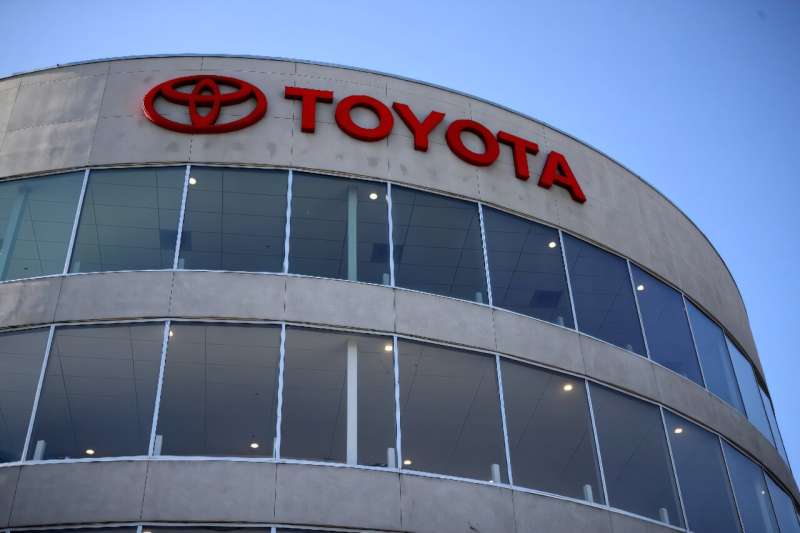
The event was attended by the Governor of the Southern Province, Professor Susiripala Manawadu, Minister of Industry and Entrepreneurship Development Sunil Handunnetti, Deputy Minister of Energy Arkam Illyas, Ambassador of Indonesia to Sri Lanka Dewi Gustina Tobing, Consul General of India in Sri Lanka Harvinder Singh, Chairman of Toyota Lanka (Pvt) Ltd. Osaki Kawabata, Chairman of the National Enterprise Development Authority Lakshman Abeysekara, Chairman of the Matara District Chamber of Industries and Commerce Najeeb Deen, other distinguished invitees, and a large number of entrepreneurs from the Southern Province.
MONETABRIEF – Sri Lanka has proposed more subsidized credit programs for several sectors in the 2027 budget amid a high inflation target which trigger high interest rates and destruction of domestic capital.
In 2027, Rs. 67,687 million has been allocated for interest subsidies and refinancing to banks,” President Anura Kumara Dissanayake said.
“Through this, it is expected to provide 174 billion rupees as concessionary loans to entrepreneurs through State and private banks.”
Sri Lanka started to have very high nominal interest rates after the central bank started to debase money from the early 1980s, the IMF’s Second Amendment to its articles allowed it to escape accountability.
Since 2015, under flexible inflation targeting, an economy that has been stabilized at great cost, has been repeatedly reflated to trigger external crises and eventual external default.
In 2026 the economy was reflated amid a budget surplus, depriving an excuse that macro-economsits used to escape accountability since February 1952.
A highly concessionary housing loan scheme of up to Rs. 5 million will be implemented to meet the housing needs of migrant workers. Under this scheme, steps will be taken to provide an interest subsidy of 10 percent for up to Rs. 3 million and an interest subsidy of 5 percent for the remaining Rs. 2 million.
It is proposed that, for the first Rs. 3 million, a contribution of 6 percent be borne by the Government and a contribution of 4 percent by the Sri Lanka Bureau of Foreign Employment, and for the remaining Rs. 2 million, a contribution of 3 percent be borne by the Government and a contribution of 2 percent by the Sri Lanka Bureau of Foreign Employment.
It is proposed to allocate a sum of Rs. 1,000 million in 2027 as the Government contribution for the implementation of this interest subsidy scheme.
It is proposed to provide concessionary loans of up to a maximum of Rs. 2 million at an annual interest rate of 3 percent to entrepreneurs for businesses operating home-based tourist accommodation, to improve such facilities and to start new home-based tourist accommodation, and it is proposed to allocate Rs. 100 million as the first phase for the payment of the necessary interest subsidies. Steps will be taken to provide the additional provisions required. It is expected to provide concessionary loans amounting to Rs. 7,500 million under this loan scheme.
It is proposed to provide a maximum loan amount of up to Rs. 500 million through banks at an annual interest rate of 5 percent to large-scale fisheries industrialists with export potential, fish product suppliers, boat manufacturers and manufacturers of other fishing gear required for the fisheries industry, to obtain the modern technology and other inputs they require. It is proposed to provide Rs. 1,000 million as interest subsidies for this purpose.
Through this, it is expected to provide loans amounting to Rs. 15,000 million.
With the aim of strengthening enterprises in rural areas and empowering Aswesuma beneficiaries, it is expected to provide loans to entrepreneurs through the Samurdhi Bank up to a maximum of Rs. 5 million at a concessionary annual interest rate of 4 percent.
In order to qualify for this loan facility, it is mandatory for such entrepreneurs to provide employment opportunities to at least five Aswesuma beneficiaries. It is proposed to allocate Rs. 200 million for interest subsidies for this purpose. Through this, it is expected to provide loans amounting to Rs. 5,000 million.
Pledge Loan Scheme for Small and Medium-Scale Paddy Mill Owners
It is proposed to implement the Pledge Loan Scheme for small and mediumscale paddy mill owners for the purchase of paddy at the Government guaranteed price as an interest-free loan scheme from 2027.
It is expected to provide financial facilities of Rs. 20,000 million through this programme. In addition to the Rs. 350 million currently allocated, further allocations are proposed to bear the additional interest subsidy of this loan scheme.
A special programme is essential for uplifting women-headed family units.
In particular, the living standards of such families living in rural areas are at a relatively low level. In order to strengthen such families economically, it is proposed to implement a group loan scheme of up to Rs. 1 million at a concessionary annual interest rate of 3 percent through the Samurdhi Bank.
Refinance and Interest Subsidy Loan Scheme for Reviving the Micro, Small and Medium Enterprise Sector (Re-MSME Plus)
The Government will provide an interest subsidy for the granting of a further Rs. 20,000 million in loans, in addition to the Rs. 30,000 million currently allocated to provide concessionary loans at an interest rate of 5 percent for the capital and working capital requirements of Micro, Small and Medium Enterprises under the Refinance Loan Scheme.
It is also proposed to allocate Rs. 200 million for this purpose as the first phase. Steps will be taken to provide the additional provisions required.
In order to make the fisheries sector eligible for this concessionary loan scheme, it is proposed to grant loans to enterprises engaged in the fisheriesindustry by considering only the business turnover in the definition of Micro, Small and Medium Enterprises.
Opposition Leader Sajith Premadasa yesterday accused the Government of abandoning its Marxist principles and embracing neoliberal economic policies, claiming that Budget 2027 had placed a greater burden on the poor while favouring the wealthy.
Addressing Parliament during the Budget debate, Premadasa said the Budget presented by President Anura Kumara Dissanayake had created “oppressive conditions” for the public instead of providing relief to those struggling with the rising cost of living.
He compared the Budget with the Buddhist teachings contained in the Cakkavatti Sihanada Sutta, which he said provided principles for governance, taxation, development and public welfare.
Premadasa also criticised the Government for what he described as a departure from the policies on which the NPP and JVP had sought a mandate from the people.
He recalled the JVP’s earlier criticism of the International Monetary Fund (IMF) and the World Bank and said the Government had now adopted the same economic path as its predecessors.
Describing Budget 2027 as a “Muhammad Ali budget”, Premadasa alleged that it “punches the stomach” of the common man and the poor while prioritising the wealthy.
He claimed that income inequality had widened between 2019 and 2025, with real household income among the poorest 20% declining by 19.6%, while that of the richest 20% had increased by 6.8%.
According to Premadasa, the income gap between the richest and poorest 20% had consequently widened from 11.2 times to 14.8 times, while the richest 20% now accounted for 55.8% of income.
He attributed the situation to inadequate wages, rising inflation and the erosion of social support.
Premadasa also questioned the Government’s claims regarding poverty and said international reports indicated that poverty remained a serious concern.
Turning to agriculture, he accused the Government of failing to honour its election promises to farmers, particularly on paddy prices and interest-free loans.
He claimed that paddy farmers were currently receiving around Rs. 95 to Rs. 98 per kilogram despite an earlier promise of Rs. 150, and alleged that support for other crops, including big onions, potatoes, chillies, fruits and upcountry vegetables, had also fallen short.
The Opposition Leader also criticised the Government’s handling of the IMF debt restructuring process, claiming that Sri Lanka had received a less favourable deal than Ghana and Senegal.
He specifically criticised the macro-linked bonds included in the debt restructuring agreement, arguing that higher economic growth could result in a reduction in the debt relief available to Sri Lanka.
Premadasa also questioned the Government’s support for micro, small and medium-scale enterprises (MSMEs), claiming that hundreds of thousands of businesses had fallen into distress and that adequate debt restructuring had not been provided.
He further criticised the Government’s progress on its digital economy programme, saying only five of 17 commitments made in the information technology sector had been fulfilled in 2026.
Questioning the progress of the proposed Digital ID and IT parks in Digana and Nuwara Eliya, he accused the Government of failing to deliver on its promises to the younger generation.
Premadasa also raised concerns over poverty alleviation, renewable energy, education, healthcare, fisheries, public sector salaries and the migration of professionals.
He questioned the absence from Budget 2027 of several relief measures he said had been promised by the NPP, including a reduction in electricity tariffs, benefits for senior citizens and measures to reduce fuel prices.
“The greatest betrayal is dimming, fading and destroying the hopes of 6.8 million people and the dreams of 22 million people who voted and did not vote,” Premadasa said.
He concluded by calling for a “middle path” based on social democracy and a social market economy, while rejecting what he described as both neoliberalism and extreme Marxism and socialism.
Continue Reading Latest Trending Latest News 7 hours ago Italy fines Meta $880m over photo privacy News 10 hours ago It is the government’s aim to make the entrepreneurship one of the driving forces in the national economy – Prime Minister Latest News 13 hours ago World Test Championship set to stay nine-team contest till 2031 Weather 13 hours ago Showers in the Northern, North-central, Eastern, Western and North-western provinces and in the Galle and Matara districts News 15 hours ago Lanka plans more subsidized credit amid high inflation target News 15 hours ago Sajith accuses Government of betraying election promises with Budget 2027 News 5 years ago ‘Dates have the highest sugar content to fight Coronavirus’ News 6 years ago Sunday Island 27 December – Headlines News 6 years ago #SundayIsland 17th December – Headlines News 6 years ago Sunday Island – 28th March News 6 years ago Sunday Island Headlines – 21 March News 6 years ago Sunday Island – 21st February – Headlines Trending News 7 days ago GMOA seeks restoration of duty-free vehicle permits
Government makes charity difficult in Sri Lanka – Pethiyagoda
Iran allows ship carrying fertiliser for SL to pass Strait of Hormuz
Failure to heed PM’s directive worsened Colombo floods: Patali
Monks defy court order as protest over A’pura development plan intensifies
Colombo floods: Facts beneath political sludge
Devananda to hand back Jaffna shops he held for 30 years to their owners
“It Will Be Forgotten in a Week” No Longer Works: Colombo’s Floods and the Demand for Proactive Governance
Copyright © 2020 Upali Newspapers (Pvt) Ltd. Solution by LankaCom Privacy Policy
Loading comments…