About Us Advertise Careers Contact Us Privacy Policy Community Guidelines
Locating… 13°C English WhatsApp Alerts Email Alerts
BREAKING NEWS
Is Sri Lanka’s Aragalaya Backfiring? – Analysis - Eurasia Review Colombo Cardinal Says Jesus’ Cross-Centered Leadership Challenges World’s Pursuit of Power - Radio Veritas Asia China details its path to a crewed Moon landing before 2030 What’s Happening in Space Policy November 22-29, 2026 65 Years of Human Spaceflight at NASA Johnson India denies sending troops to Sri Lanka - Yeni Safak English Anode-free sodium batteries last longer thanks to an electrolyte that forms its own shield Pakistan loss sets up Netherlands-Ireland virtual semi-final - ICC Sri Lanka seeks Ukraine, Estonia, and Google expertise for digital ID plans - Biometric Update Sri Lanka and Thailand sign visa-free travel agreement - Newswire
SPACEFLIGHT

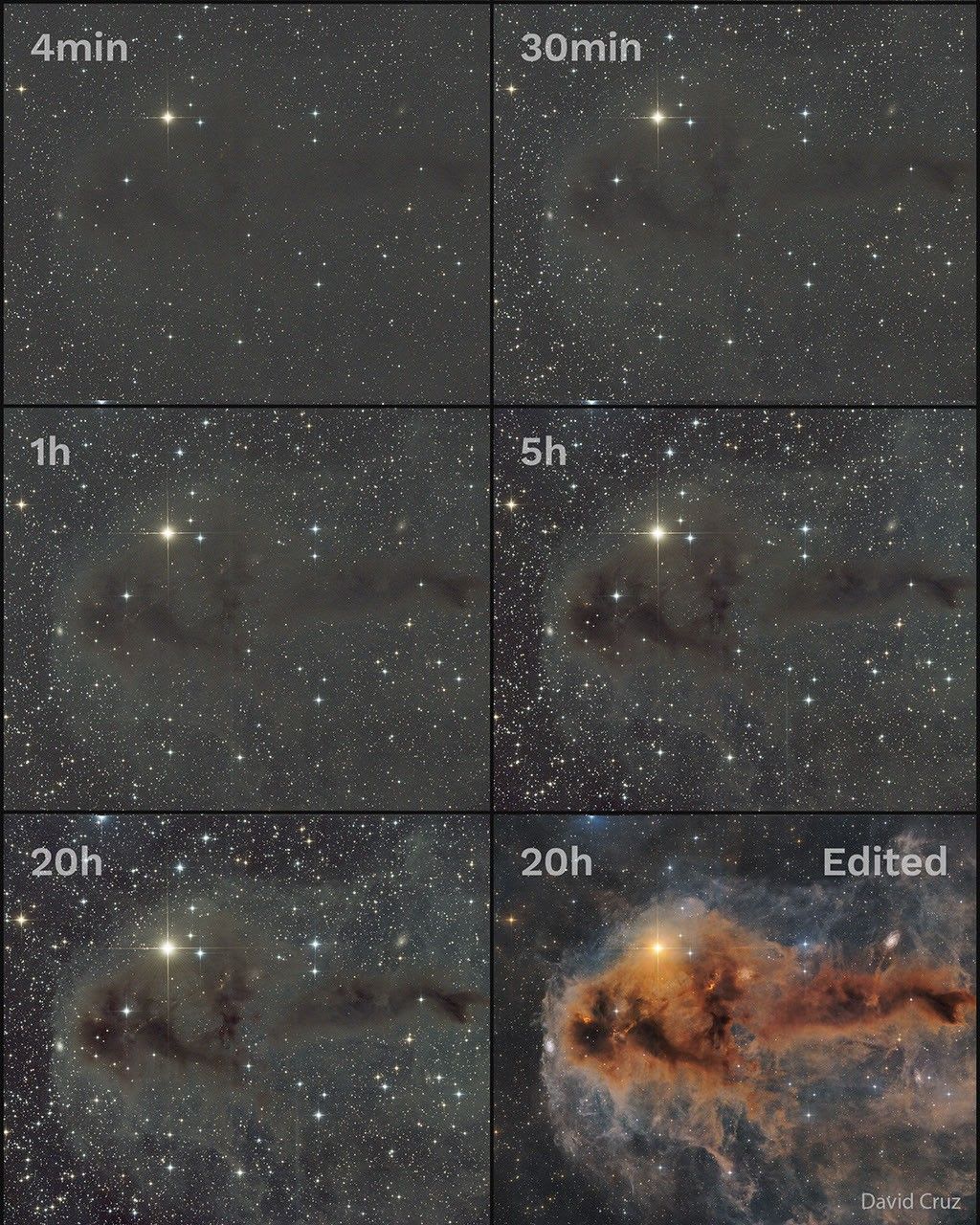
APOD: 2026 November 23 – The Emergence of Dark Nebula Lynds 1251

Lanka Hit News • Nov 23, 2026 · 3h ago • 1 min read
Share:

APOD Science APOD APOD: 2026 November 23 – The… Today’s APOD Archive Submissions Index Search Calendar RSS Education About Discuss   APOD Astronomy Picture of the Day Discover the cosmos! Each day a different image or photograph of our fascinating universe is featured, along with a brief explanation written by a professional astronomer. The Emergence […]

Discover the cosmos! Each day a different image or photograph of our fascinating universe is featured, along with a brief explanation written by a professional astronomer.

Explanation: If you stare into space for a long time, what might you see? At first, you might only see the usual brightest stars , but if your eyes (or camera) could continue to collect light , you would see increasingly more. In the direction of the featured image , after only a few minutes, you would begin to notice some regions without stars . As your staring continued, the dark region would become better defined, and after a full 20 hours, you would notice a strange dark structure . To celebrate, you use digital processing to brighten the image and enhance the colors. At the end, you might have an excellent image of Lynds 1251 (LDN 1251), a star -forming region laced with opaque brown-appearing interstellar dust. Also known as the Rotten Fish Nebula, LDN 1251 is home not only to young stars and dust , but also, your long staring indicates, energetic shock waves , fast stellar winds , and powerfully beamed jets . Tomorrow's picture: galaxies ringing

NASA explores the unknown in air and space, innovates for the benefit of humanity, and inspires the world through discovery.


Join the Conversation