

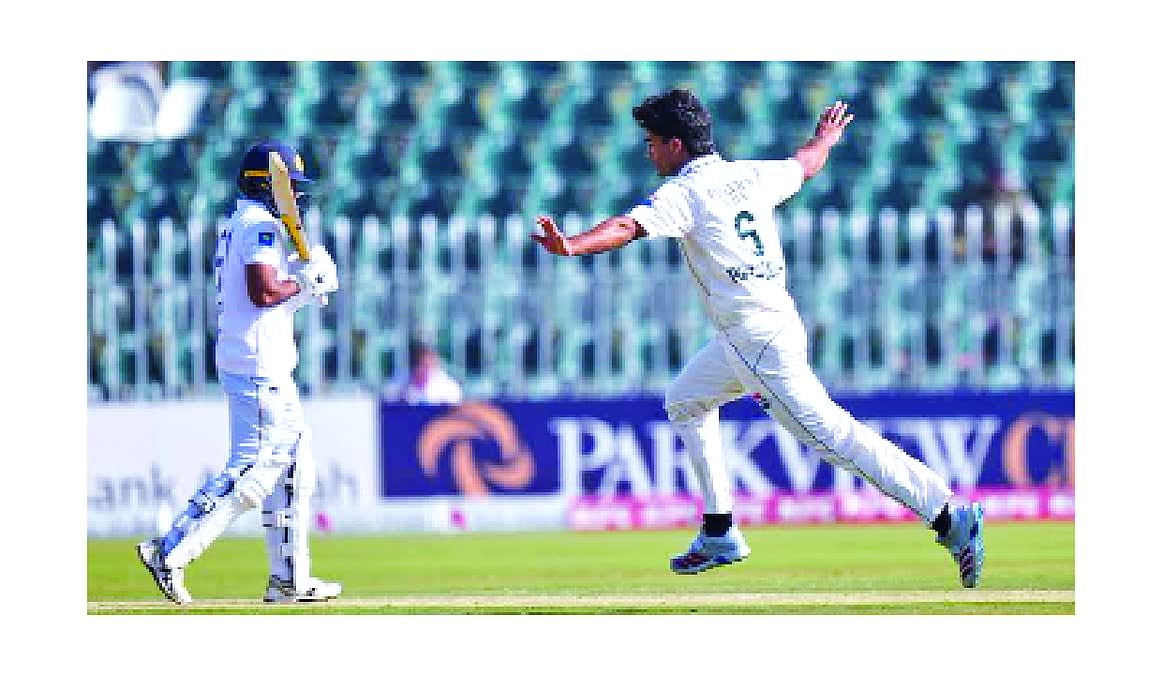
Rathnayake fights on as Sri Lanka pay for casual batting
Bens beat St. Thomas’ to book U19 Division I Tier B tournament final berth
Sloppy Sri Lanka batting hands Pakistan control
Richmond rescued by ninth-wicket stand, Samash hits century for Joes
Senior Technical Official of Sri Lanka Athletics K.D.U. Dhanawardhana passes away
“Institutions are the rules of the game in a society.” — Douglass C. North
As Sri Lanka navigates its post-crisis economic recovery, the national conversation frequently circles back to an urgent, undeniable reality: the country must aggressively attract Foreign Direct Investment (FDI) and spur domestic capital formation to secure sustainable, export-led growth. While the Government has recently invited proposals and accelerated frameworks to roll out digital single window infrastructure, public and policy discussions have largely remained confined to the narrow mechanics of procurement.
This is a missed opportunity. A Single Window for Investment is not merely an IT procurement project or a software upgrade. It is a (i) foundational governance reform, (ii) a productivity multiplier, and (iii) an investment competitiveness make-or-break. To transform Sri Lanka’s economic landscape, we must view the Single Window not as a digital database, but as a total re-engineering of how the state interacts with (i) capital, (ii) entrepreneurship, and (iii) risk.
Sri Lanka stands at a historic crossroads. Recent policy initiatives by the Ministry of Finance and the Presidential Secretariat underline a national push to streamline trade and investment. Yet, capital is globally mobile and fiercely selective. Investors today do not choose destinations based on potential alone; they choose them based on (i) friction, (ii) predictability, and (iii) execution speed.
Fragmented bureaucratic clearance systems impose a heavy “ hidden tax ” on every enterprise seeking to set up operations. By linking the upcoming Single Window initiative to broader structural adjustments, Sri Lanka can signal to international markets that it is moving past legacy bureaucracy and entering a new era of transparent, rules-based economic governance.
The High Cost of the Current System
“Time is the scarcest resource, and unless it is managed, nothing else can be managed.”
Under the status quo, launching a major project in Sri Lanka often requires navigating a maze involving (i) multiple regulatory bodies(ii), line ministries, and (iii) approval-granting agencies. Investors routinely have to deal with up to a dozen or more separate entities—spanning (i) environmental authorities,(ii) local government bodies, (iii) utility providers, (iv) revenue departments, and (v) sector-specific regulators.
This labyrinth generates critical economic costs :
· Prolonged Time-to-Market: Delays in obtaining construction permits, environmental clearances, and import licenses push back project commercialization by months, sometimes years.
Discretionary decision-making and conflicting departmental mandates breed opacity and corruption risks.
Global investors operating on tight timelines bypass Sri Lanka entirely in favor of regional peers where approvals are swift, digital, and predictable.
The economic cost of these delays is (i) measurable in lost jobs, (ii) foregone export revenues, and (iii) stagnant productivity.
What Is a Single Window for Investment?
A Single Window for Investment is a centralised digital and institutional mechanism that allows parties involved in trade and investment to lodge standardized information and documents with a single entry point to fulfill all regulatory requirements.
Rather than an investor submitting separate dossiers to 10 or 15 different agencies, data is submitted once. The system acts as a central intelligence and routing hub, concurrently distributing requirements to (i) participating government agencies (PGAs), (ii) tracking progress, (iii) managing approvals, and (iv) issuing unified digital certifications. It replaces (i) physical queues, (ii) paper files, and (iii) repetitive bureaucratic touch points with seamless interoperability.
Lessons from International Success Stories
Global benchmarks demonstrate that successful investment facilitation relies on political will, institutional integration, and uncompromising digital execution. (See Table)
Beyond Technology: Reforming Institutions
As institutional economist Douglass North noted, the rules of the game dictate economic performance. Technology alone cannot fix a broken administrative process; digitizing a bad process merely accelerates inefficiency.
True reform requires three parallel tracks:
Enacting a comprehensive umbrella statute for electronic commerce and digital governance that supersedes legacy statutory mandates requiring physical seals, wet-ink signatures, and paper-based archiving is foundational to this reform. This requires explicitly granting legal validity to automated “deemed approval” mechanisms, ensuring that if a regulatory agency fails to review and respond within a legally mandated Service Level Agreement (SLA), the digital system automatically issues the clearance. Furthermore, it involves harmonizing conflicting sectoral laws across the 16+ approval-granting bodies to resolve legal contradictions where older statutes vest absolute discretionary power in individual officials, while simultaneously establishing robust data protection and cybersecurity frameworks to safeguard proprietary investor data.
Finally, empowering an apex oversight authority with statutory teeth is essential to legally bind all participating government agencies to the digital workflow and penalize any unauthorized offline procedural demands .
Executing rigorous Business Process Re-engineering (BPR) requires radically trimming redundant bureaucratic steps by systematically mapping and purging obsolete, overlapping clearance requirements that currently force investors to jump through unnecessary hoops. This transformation involves replacing sequential, siloed departmental reviews with concurrent digital processing workflows, enabling multiple regulatory bodies to evaluate applications simultaneously rather than waiting in a sluggish line. Furthermore, it demands establishing strict, legally binding service level agreements (SLAs) for every participating agency, complete with clear tracking metrics and administrative accountability for unwarranted delays. To ensure continuous optimization, the BPR framework must integrate feedback loops from private sector users to routinely audit and streamline bureaucratic touch points. Ultimately, this structural overhaul re-engineers the state apparatus from a bottleneck of obstruction into an efficient, streamlined engine of investment facilitation.
· Cultural Transformation: Achieving a profound cultural transformation requires fundamentally shifting the mindset of public officials from traditional gatekeepers of bureaucratic control to proactive facilitators of national wealth creation and economic dynamism. This cultural reset must be driven from the top down through leadership alignment programs that redefine public service success not by how many proposals are blocked or delayed, but by how rapidly legitimate investments are operationalized. Furthermore, it necessitates dismantling entrenched risk-averse behaviors by instituting institutional protections that encourage responsible decision-making rather than penalizing officials for exercising legitimate administrative discretion. Integrating modern performance management frameworks and incentive schemes—where career advancement, departmental commendations, and resource allocations are directly tied to responsiveness and investor satisfaction scores—will further reinforce this ethos. Ultimately, cultivating this service-oriented culture transforms the public sector into an engaged, empathetic partner for the business community, ensuring that state institutions actively champion rather than hinder national competitiveness.
To build a world-class Single Window, Sri Lanka should adopt a phased, pragmatic implementation strategy:
· Phase 1: Legal & Process Baseline (Months 1–6): Finalize the legislative framework, map out regulatory bottlenecks across agencies, and establish the overarching governance structure backed by the Ministry of Finance.
· Phase 2: Core Platform Development & Integration (Months 6–18):
Procure and configure the digital architecture, connect core regulatory agencies (such as the Board of Investment, Inland Revenue, Registrar of Companies, and Central Environmental Authority), and conduct rigorous user acceptance testing.
· Phase 3: Pilot Launch & Change Management (Months 18–24):
Roll out the system for key sectors (e.g., export manufacturing and high-tech IT investments), backed by intensive training for public servants and private sector users.
· Phase 4: Full Scale-Out & Continuous Optimization (Month 24 Onward):
Integrate secondary municipal and utility approval bodies, introduce AI-driven tracking analytics, and tie agency performance metrics to processing speeds.
Making the Single Window the Cornerstone of Economic Transformation
“The secret of economic growth is simple: improve productivity.”
Dismantling regulatory friction unleashes trapped private capital, empowering domestic entrepreneurs and foreign investors alike to scale operations rapidly without losing momentum to administrative inertia. Cutting through red tape drastically compresses the gestation period of capital projects, allowing high-value manufacturing and technology ventures to generate economic value and revenue much sooner. Streamlined digital processes eliminate opportunities for discretionary rent-seeking and corruption, fostering a predictable, rules-based market environment that attracts sophisticated global enterprises. Accelerating business entry and expansion directly multiplies high-skilled employment opportunities, keeping domestic talent within the country and reversing destructive brain drain trends. Transforming state machinery into a lean, efficient facilitator creates a virtuous cycle of sustained productivity growth, permanently elevating national competitiveness and fiscal resilience.
The decision to establish a National Single Window for Investment transcends standard bureaucratic modernization; it stands as arguably the most consequential structural intervention available to Sri Lanka since the broad economic liberalizations and institutional shifts of the late 1970s. By dismantling legacy legal roadblocks, re-engineering siloed workflows into concurrent digital paths, and fundamentally transforming the public service mindset from control to facilitation, this reform creates an ecosystem where capital can thrive. Success will ultimately depend on treating this initiative not as a routine IT procurement project, but as a historic, uncompromising mandate for national institutional renewal— moving decisively from red tape to red carpet to rewrite Sri Lanka’s economic narrative for generations to come.
The writer, among many, served as the Special Advisor to the Office of the President of Namibia from 2006 to 2012 and was a Senior Consultant with the UNDP for 20 years. He was a Senior Economist with the Central Bank of Sri Lanka (1972-1993). He can be reached via [email protected] .)
· International Monetary Fund (IMF): Selected Issues Papers on Governance, Structural Reforms, and Investment Climates in Emerging Markets.
Doing Business reports and diagnostic studies on Regulatory Governance and Single Window Implementation Frameworks.
· Organization for Economic Co-operation and Development (OECD):
Policy Framework for Investment and Guidelines on Investment Facilitation.
· United Nations Conference on Trade and Development (UNCTAD):
Global Investment Reports and Investment Policy Reviews.
Enterprise Singapore (Business Grants Portal); Invest KOREA (One-Stop Service guidelines); Rwanda Development Board statutory frameworks; Estonia Information System Authority (X-Road architecture).
All News Advertisement Related Topics: Up Next Who owns the South China sea?
WHATS IN A NAME – “AMBASTAR LANE”, HENDALA, WATTALA
Your email address will not be published. Required fields are marked *
Save my name, email, and website in this browser for the next time I comment.
Dr B. J. C. Perera MBBS(Cey), DCH(Cey), DCH(Eng), MD(Paediatrics), MRCP(UK), FRCP(Edin), FRCP(Lond), FRCPCH(UK), FSLCPaed, FCCP, Hony. FRCPCH(UK), Hony. FCGP(SL) Board Certified Specialist Consultant Paediatrician and Honorary Senior Fellow, Postgraduate Institute of Medicine, University of Colombo, Sri Lanka.
An independent freelance medical correspondent.
An individual’s diet is made up of a variety of components of the food he or she eats and nutrition is the way that the food people eat nourishes their bodies. Good nutrition means that the body is getting all those necessary nutrients, vitamins and minerals it needs, to work at its best level. Most people know that a balance of good nutrition and physical activity can help them reach and maintain a healthy weight. However, the benefits of good nutrition go beyond weight. Good nutrition can also improve cardiovascular and other body system functions, mental well-being, school and cognitive performance and even wound healing or recovery from illness or injury. Indeed, proper nutrition is now well known to reduce the risk for certain diseases, including heart disease, diabetes, stroke, some cancers, and osteoporosis in late middle age and in the elderly.
A number of factors impact on a child’s nutritional and dietary needs. They are also somewhat variable depending on the age and circumstances of the child. Different age groups have different nutritional needs and the diet of children should meet those specific needs. For example, an infant needs a different diet and nutrition than a teenager. In addition, factors such as a person’s height and current weight, current health status and activity level also affect what kinds of nutrients they need and how much they need. These considerations are even more important in children as the growth phases need to be taken into account when nutritional factors are discussed in them. A healthy diet helps children grow and learn. It also helps to prevent obesity and weight-related diseases.
There are some basic guidelines that broadly outline the types of healthy foods that children should be given. In the West, it is advocated that at least five servings of a variety of foods with fruits and vegetables, in palatable combinations, should be offered per day. As to how practicable this is in our country has been widely debated but just five servings of these important articles of food are not all that difficult to provide. As for the necessary protein intake, healthy sources such as milk, lean meats, fish, poultry, nuts and eggs should be selected. Whole-grain breads, rice and other cereals rich in fibre should generally be chosen. Broiling, grilling or steaming foods are always preferable to frying in oil. Fast foods and junk foods should be limited and plenty of water and milk should be given instead of sugary fruit drinks and sodas. Making the so called “smart choices” in this endeavour is likely to provide rich dividends in the long term.
Another important part of good nutrition is creating a balance between the food that is eaten which is the energy that is put in, and physical activity which is the energy that is expended. It is important to choose foods and amounts of foods that will help the child maintain a healthy weight and provide the nutrients he or she needs while keeping their calories under control. The best course of action would be to combine healthy eating with a balance between food and physical activity to improve overall health. Good nutrition requires a balance of food, vitamins, and minerals from a healthy diet and physical activity. Overweightedness and obesity can result if things get out of balance such as eating too much food, not getting enough physical activity, or having too much of one or more nutrients such as sugars and starchy foods in the diet.
Snacking is a major pastime for many children. It must be realised that this is not necessarily bad. Snacking can not only help a child curb hunger throughout the day but also provide energy and important nutrients. However, the quality of the snacks and the type of snacks are the important keys. At the outset, it is always best to keep the so-called junk food out of the house. A child will not clamour for cookies or candy bars or different types of chips if they are not kept on hand inside the house. Instead, it is always wise to set a good example by snacking on healthy foods on the part of the other inmates of the house. It is very wise to go for the grainy foods. Whole-grain snacks and high-fibre whole-grain cereals can provide a child a whole lot of energy. It is always a good idea to provide small carrots or other raw vegetables with fat-free dressings. Fresh fruit and fresh fat-free yogurt are excellent choices for children. Many breakfast foods such as low-sugar, whole-grain cereals and whole-grain toast, make great afternoon snacks as well. Likewise, a small serving of last night’s leftover protein rich foods could double as an after-school snack.
Children’s snacks which are healthy do not always need to be bland. To satisfy a child’s sweet tooth, offering fat-free puddings, yogurt, curd or fruit are excellent alternatives. Many articles of food made from skimmed milk and fat-free yoghurt are extremely good choices for children. Broadening the menu of regular meals and offering out-of-the-usual fare, such as pineapple and bananas, various types of other fruits such as berries, red or yellow peppers, mangoes and a variety of nuts with the standard meals is one way of making food interesting to children. Mixing up of various types of articles of food and cooking them in different ways would always help to keep the interest in food in children. Promoting independence and keeping a selection of ready-to-eat articles of food such as fresh vegetables in the refrigerator, leaving fresh fruit in a bowl on the counter, storing low-sugar whole-grain cereal and fruit canned or packaged in its own juice in an easily accessible cabinet are some convenient ways of helping children develop good food habits. When they are hungry, children would automatically learn to make use of these readily available articles of food. Restricting snacking to the dining area or the kitchen is quite a good way to encourage the intake of the proper amounts of snacks. This will prevent a child consuming countless calories from mindless munching in front of the television.
One must be very careful of the many gimmicks used by the food industry to sell their products. Foods marketed as low-fat or fat-free items can still be high in calories. Likewise, foods touted as cholesterol-free can still be high in fat, including saturated fats and added sugar. It is a good idea to check nutrition labels to find out the whole story. Virtually hidden “small print” may let the cat out of the bag and reveal the real contents of the enclosed articles of food. It is a good practice to carefully read the labelling of most packaged foods.
It is also wise to think carefully as to why some good eating habits are so beneficial to children. They will learn better in school, feel and look their best and have a better chance of a long and healthy life if the parents start teaching them good eating habits as early as possible and set a good example for them by the parents themselves. Focus should be on feeding children’s foods that are rich in nutrients such as whole-wheat products, cereals, fruits, vegetables and milk with moderate portions of meat, fats and added sugar. It should also not be forgotten that children also need to drink plenty of fluids and preferably water, during the entire course of a day.
Starting the day in a most healthy way with a good breakfast is very desirable. It has even been said that breakfast is the most important meal of the day. It should provide around a quarter of a child’s daily nutritional needs. Even with a healthy breakfast, it is important to children to eat small frequent meals, including snacks, to sustain healthy growth. Serving a child’s breakfast cereal with milk will provide almost a quarter of their daily calcium needs as well. Fortified and vitamin enriched cereals and milk make it easier to include a variety of nutrients in one meal, especially for children who are picky eaters.
Lunch can be a relatively light meal consisting of a helping of rice or any other carbohydrate with many other articles of food added to provide the nutrients required by the child. Preparing lunch-boxes instead of buying food at school tuck-shops or canteens is healthier and more economical. Great lunch box additions also include a variety of fruits, cereals and milk. The secret is to provide a good mix of a variety of foods. An afternoon snack with tea or milk is an excellent way of keeping the child’s interest in food going and also providing some further nutrients. The main meal is usually served as dinner when the family can enjoy it together.
This too should be a wholesome meal which need not be too heavy with added fats and sugars. A good mix of all nutritious elements is the key. Generous helpings of dried nuts or fruits at the end will complete a wholesome nutritious meal. Fruits for dessert are a very good way of ensuring a reasonable intake of this important article of food. Fruits such as bananas, mangoes, pineapple etc, available readily in this country, are an excellent source of some important nutrients including minerals. It is not at all necessary always to go for the expensive imported fruits and canned materials for proper nutrition.
It is quite important for parents to be positive role models. If the parents are practicing healthy habits, it is all that much easier to convince children to do the same. The idea should be to get the whole family to be active and it is very useful to plan times for everyone to get moving together. Taking walks, riding bikes, swimming together and even working on the garden together are just a few ways in which the entire family could join in and be active. Everyone will benefit from the exercise and the time together. It is also useful to limit TV time, video game time and computer time as such habits lead to a sedentary lifestyle and even excessive snacking. It is best to encourage physical activities that children really enjoy. Every child is unique. Let children experiment with different activities until each child finds something that he or she really loves doing. They will stick with it longer if they love it. It is not a good idea to reward children with food. Sweets, chocolates and other sugar rich articles given as rewards tend to encourage bad habits. Making dinnertime a family time is also an excellent idea. This is when everyone sits down together to eat. Most children love to get involved with cooking and planning meals. Everyone develops good eating habits together and the quality time with the family will be an added bonus. With such manoeuvres it is most likely that the parents could stay involved and be advocates for healthier children.
Finally, this is a bit of advice from someone who has worked with children for over half a century. It is very important to remember that children are inherently versatile creatures. Even in the same family, two children may not be totally identical. They may have different outlooks, preferences and needs. In the same way, their nutritional preferences too may vary. Parents need to learn to humour their differences in penchants, even in nutrition. It would be a somewhat unwise principle to undertake a “one size fits all” perspective to cater to their dietary needs and partialities. For many children, variety even in nutrition, would indeed be the spice of life.
Continue Reading Features Treasure, treachery and race against time Published
Buchan is, to my mind, the best writer of thrillers in the period between the two world wars, but I should note that probably in those days Dornford Yates was more popular. I read one book by him many years ago, on a train from Chennai to Delhi way back in 1997. This was The House That Berry Built , which was among the books that came to Lakmahal from the collection of my aunt Lakshmi. It was a murder mystery of sorts, but more concerned with a house in the Pyrenees which Berry Pleydell was building. And though it was fun, I was not gripped, and thought no more of Dornford Yates until last year, when Penny, the wife of Bruce Balden, with whom I stayed in Berwick, where he had retired, introduced me to Yates’s Chandos series.
Those are much more fun, and I finished one book in Berwick and brought away two more, for she had spare copies. And having hugely enjoyed them, I was looking forward to reading another one when I stayed with them this year on my way to the Shetlands. But it turned out that Penny had heaps of books for me, since she had bought a job lot of Yates’s novels for her sister and had found that she already had several of them.
So I was given the rest and brought back more than half a dozen, including four new Chandos books. And, of course, they were the first I started to read, except for The House of the Four Winds by the incomparable John Buchan. And unlike with the Buchan, which I read slowly and savoured, I read these quickly. Having hugely enjoyed the first, I started on a second and finished that too very swiftly, and then decided I must ration them and only return to Richard Chandos after several weeks.
is the first Chandos book, and was so popular that it was several times reprinted, as the various dust jackets indicate – and also recorded by Alan Rickman, as is also shown. It starts with Chandos witnessing a murder when on his way back to England from France. Having stopped by the side of the road to have his lunch, he hears an altercation through a drain in the bank against which he is sitting. When he looks over it, he is just in time to see a man called Ellis shoot another, who has refused to share with him some source of wealth.
Chandos dodges behind the bank and, when he looks again, Ellis is gone, and he rushes to help the stricken man. But nothing can be done, though before he dies, the man entrusts his dog to Chandos, with the remark that he will find something in its collar that will pay for its keep.
Chandos finds nothing, but when he is back in England, his overcoat is taken in error by another man at his club. The latter asks him, when returning it, whether he had a dog collar in the right-hand pocket. This is how he meets Jonathan Mansel, who tells him that the inscription on the collar is not a date, but a number – that of a member of the secret service in the War, ‘a crook but he was a very good man’. And between them, and George Hanbury, the friend with whom Chandos was going to share a flat and who had been sent down with him from Oxford, they find what is in the collar: a narrative explaining that there was a treasure hidden near a well dug in an Austrian castle in the eighteenth century.
But having written at length about the first chapter of the first Richard Chandos book, which Dornford Yates published in 1927, I will move more quickly over the rest of the book. The first chapter has to be described in detail, for it is a strange set-up, but what happens thereafter is straightforward enough.
Chandos, Hanbury and Mansel set off to find the castle where the treasure is hidden, having agreed that Mansel should be in charge. He finds servants for them, and Bell and Rowley, along with his own man Carson, prove invaluable assistants with the intricate arrangements that have to be made. For before the trio leaves, they realise that Ellis has traced them, and he and his associates have to be dodged.
But this is an impossible task, for they are dogged all the way, and indeed, when they come across the castle, it is to find that the others, led by a man Mansel knows of called ‘Rose’ Noble, have made a down payment on it. But Mansel then leases it, so they get to occupy the place, and after that there is an unremitting struggle to find the treasure.
Emptying the well is not easy, but the heroes manage to do it and go up the passage, only to find that their way is barred. But then they are attacked by the innkeeper they had thought friendly, and after they have got away, they find that Noble and his friends have taken over the area around the well and also forced the innkeeper to help them.
So the heroes are confined to the house, but because of the bars, Mansel has already decided to dig from the house, since they had found an underground shaft. And this they do, while Noble, not understanding how the wellsprings gush, allows the well to be filled again.
So we now have a race: the villains trying to empty the well, and getting help from the friends of the innkeeper, while the heroes dig from the castle. And, of course, they all get through at the same time, while the villains also manage to get into the castle and find the subterranean passage.
With the villains blocked by the bars, the heroes find the treasure and fill up their saddlebags, but then their tunnel collapses behind them. So there is a preposterous climb up the sides of the well, from which they emerge to find no one, for Noble has gone to the cellars. There, however, he is outwitted, not least because he has shot the tinker who had helped the innkeeper, so that the innkeeper then draws up the rope to the cellars.The servants are drawn up to the top of the well by the heroes, who have climbed up, and they make good their escape, though Noble has survived in the cellar and lives to fight another day.
During his 2027 Budget speech, President Anura Kumara Dissanayake outlined Sri Lanka’s updated trade strategy, which includes expanding the existing Free Trade Agreement (FTA) with India, pursuing a new FTA with China, applying for membership in the Regional Comprehensive Economic Partnership (RCEP), and negotiating Comprehensive Economic
Partnership Agreements with the United Arab Emirates and Oman. He also highlighted the upcoming Sri Lanka–European Union Sustainable Trade and Economic Integration Project (set for 2027–2030), while omitting any mention of initiating negotiations for FTAs with the European Union or the United Kingdom.
A few weeks earlier, Deputy Minister Anil Jayantha told the parliament that, “It is expected to examine and report on possible options for securing long-term and sustainable market access to the EU through a deeper economic arrangement, including a possible comprehensive trade agreement, in the event of Sri Lanka graduating from the GSP+ scheme if it is classified as an upper-middle-income country by the World Bank for three consecutive years. Sri Lanka has recorded upper-middle-income status in 2026.”
The government knows that if Sri Lanka maintains macroeconomic stability and retains its World Bank Upper-Middle-Income Country (UMIC) classification, the nation will meet the graduation thresholds for both the European Union’s Generalized Scheme of Preferences (GSP) and the United Kingdom’s Developing Countries Trading Scheme (DCTS) by July 2028. Upon the conclusion of an 18-month transition period, Sri Lankan exports will become subject to standard MFN tariffs—the least favourable duty regime—within these two critical markets, effective
January 1, 2030. Such a transition would significantly erode the price competitiveness of Sri Lankan goods in the EU and the UK, which represent the country’s first- and fourth-largest export destinations, respectively. Consequently, preserving preferential, duty-free market access beyond January 2030 requires Sri Lanka to negotiate and ratify bilateral Free Trade Agreements (FTAs) with both the EU and the UK. (For further analysis, please refer to my article at https://island.lk/life-after-the-loss-of-gsp-plus/)
Given these circumstances, it remains unclear why AKD deliberately omitted any reference to the need for an FTA with the EU and the UK in the budget speech.
In my view, the budget speech’s only encouraging takeaway regarding FTAs was the plan to expand Sri Lanka’s existing Free Trade Agreement with India. Since it was signed, the ISLFTA has shown just how important trade deals are for diversifying exports. As a direct result of the FTA, India has emerged as Sri Lanka’s third-largest export market and second-largest preferential market. Expanding this agreement is long overdue.
Major on the majors, minor on the minors
To achieve meaningful economic gains from FTAs, Sri Lanka should prioritise trade partners whose import needs align with its own export strengths, rather than targeting economies that produce competing goods. Simply put, our primary markets should take precedence wherever necessary and feasible in Free Trade Agreement negotiations.
Unfortunately, over the past decade, Sri Lankan negotiators and policy wonks have expended significant political capital, time, and analytical effort on marginal partners instead of focusing on high-impact economies. For example, the FTAs with Singapore and Thailand have yielded minimal export growth and negligible investment flows. Continuing this approach by prioritising deals with China, Oman, the UAE, and ASEAN nations through RCEP risks further draining the country’s limited institutional capacity.
Meanwhile, Sri Lanka is steadily losing key market share in its top export destinations to competitors with better, more reliable market access. Hence, Colombo should ideally have launched FTA negotiations with the EU and the UK upon reaching upper-middle-income status in 2019. Because these agreements take significant time and resources to negotiate, it is necessary to start on them as early as possible.
Yet, even at this critical juncture, there appear to be no concrete plans to launch talks with the EU and the UK. Perhaps the same circle of trade advisers who directed FTA policy under the Ranil Wickremesinghe administration is deliberately steering the current government off course.
Equally puzzling is the silence from our exporters and key industry bodies—most notably the Joint Apparel Association Forum (JAAF)—who have yet to mount a serious lobbying push for trade agreements with these two indispensable markets.
(The writer can be reached at [email protected] )
Continue Reading Latest Trending News 56 mins ago Executive officers to stage countrywide token strike today News 57 mins ago Lalkantha wants people to wait until next budget for cost of living relief News 58 mins ago Lankan Parliament to debate motion seeking Imran Khan’s release News 1 hour ago Police constable among three arrested with ‘Ice’ in Muruthalawa News 1 hour ago Over 500 march for justice for Kavantissa, demand accountability over elephant deaths News 1 hour ago Mystery fire kills four members of same family, including two young children News 5 years ago ‘Dates have the highest sugar content to fight Coronavirus’ News 6 years ago Sunday Island 27 December – Headlines News 6 years ago #SundayIsland 17th December – Headlines News 6 years ago Sunday Island – 28th March News 6 years ago Sunday Island Headlines – 21 March News 6 years ago Sunday Island – 21st February – Headlines Trending Sports 5 days ago ‘Cricket reforms wouldn’t have happened if not for AKD’ – Wettimuny
CEJ takes forest destruction, elephant corridor battle to Court of Appeal
A Right Royal Reunion in Colombo and Jaffna Oct. 13-18, 2026
The boy who took wildlife to television — and went on to study the world’s reptiles
Beyond numbers: Where is real plan to rebuild Sri Lanka?
MP Perera names four ministers over alleged corruption
Lanka likely to enter new IMF agreement – Deputy Minister
Lanka, India begin Mitra Shakti XII military exercise
Copyright © 2020 Upali Newspapers (Pvt) Ltd. Solution by LankaCom Privacy Policy



Loading comments…