
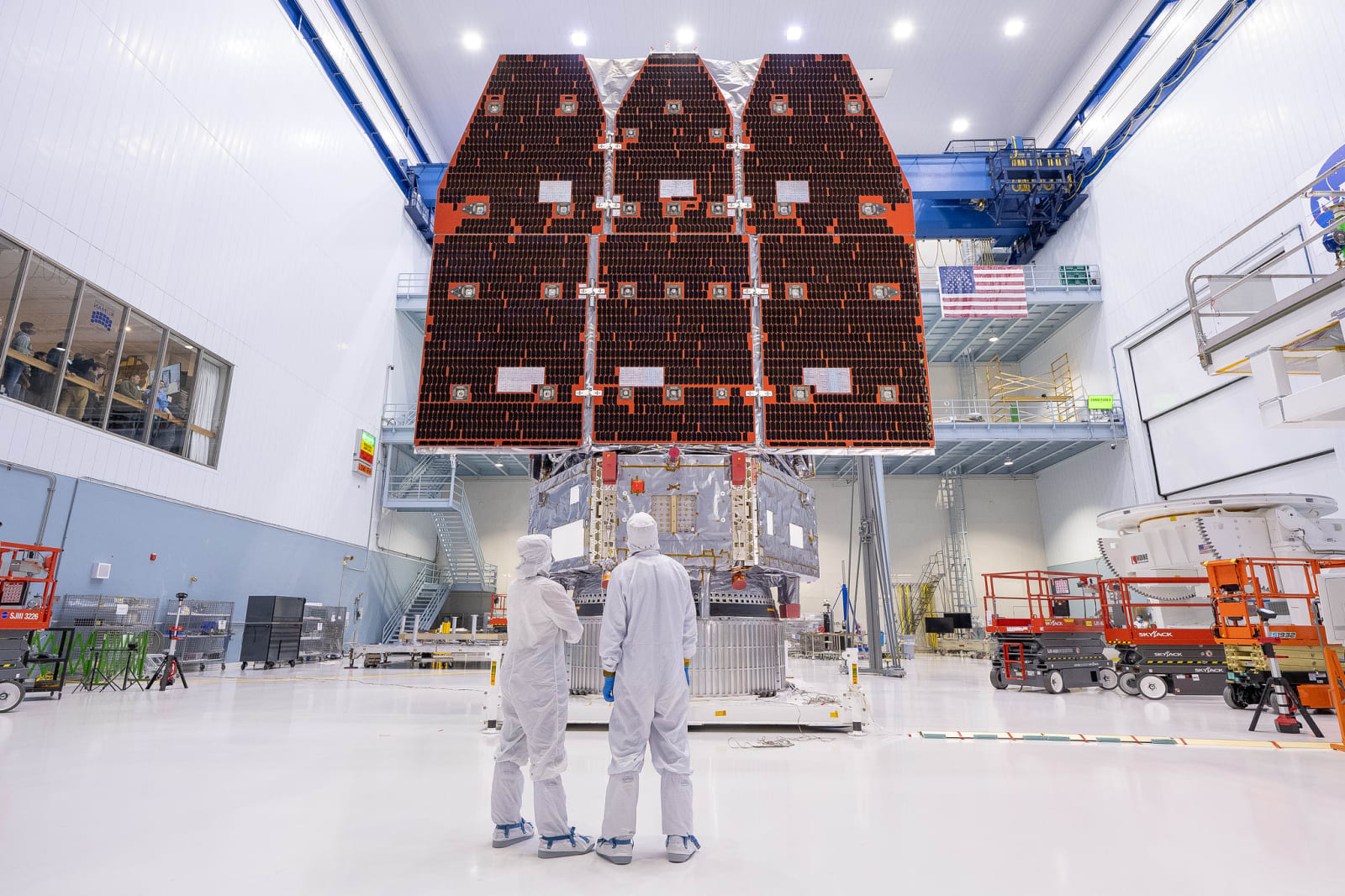
NASA will release the first images from its Nancy Grace Roman Space Telescope during a live stream from the American Geophysical Union (AGU) Annual Meeting in San Francisco at 3:30 p.m. EST (12:30 p.m. PST) Monday, Dec. 7.
The images will showcase the unique scientific capabilities of Roman, which will soon capture deep, panoramic, never-before-seen views of the universe to explore the mysteries of dark energy, dark matter, and worlds outside our solar system.
Watch the unveiling on a variety of platforms online:
Roman’s first images will simultaneously post on the agency’s website .
The following is a list of activities for release of the first images (all times Eastern):
NASA will update this advisory later with briefing participants.
The agency also will offer embargoed interviews following the conclusion of the briefing to registered media. A recording of the media briefing will be available on the AGU website after the embargo lifts at 3:30 p.m. on Dec. 7. 2:45 p.m.: NASA Administrator Jared Isaacman will participate in a fireside chat at the AGU meeting, moderated by journalist Alex Witze, to discuss the powerful connections between Earth and space science, the discoveries shaping our understanding of the universe, and the role NASA science plays in advancing what is possible. 3:30 p.m.: The live broadcast for the release of Roman’s images will stream through a variety of NASA platforms, in addition to AGU channels. Tuesday, Dec. 8
NASA invites the public to claim a corner of the universe with one of Roman’s select first images . When Roman reveals its first images, each pixel will represent a unique piece of the cosmos. Once the image is revealed, participants can look up their personal pixel and receive a digital trading card with key information they can share with NASA social accounts.
Get involved by hosting your own event for the reveal of Roman’s first images.
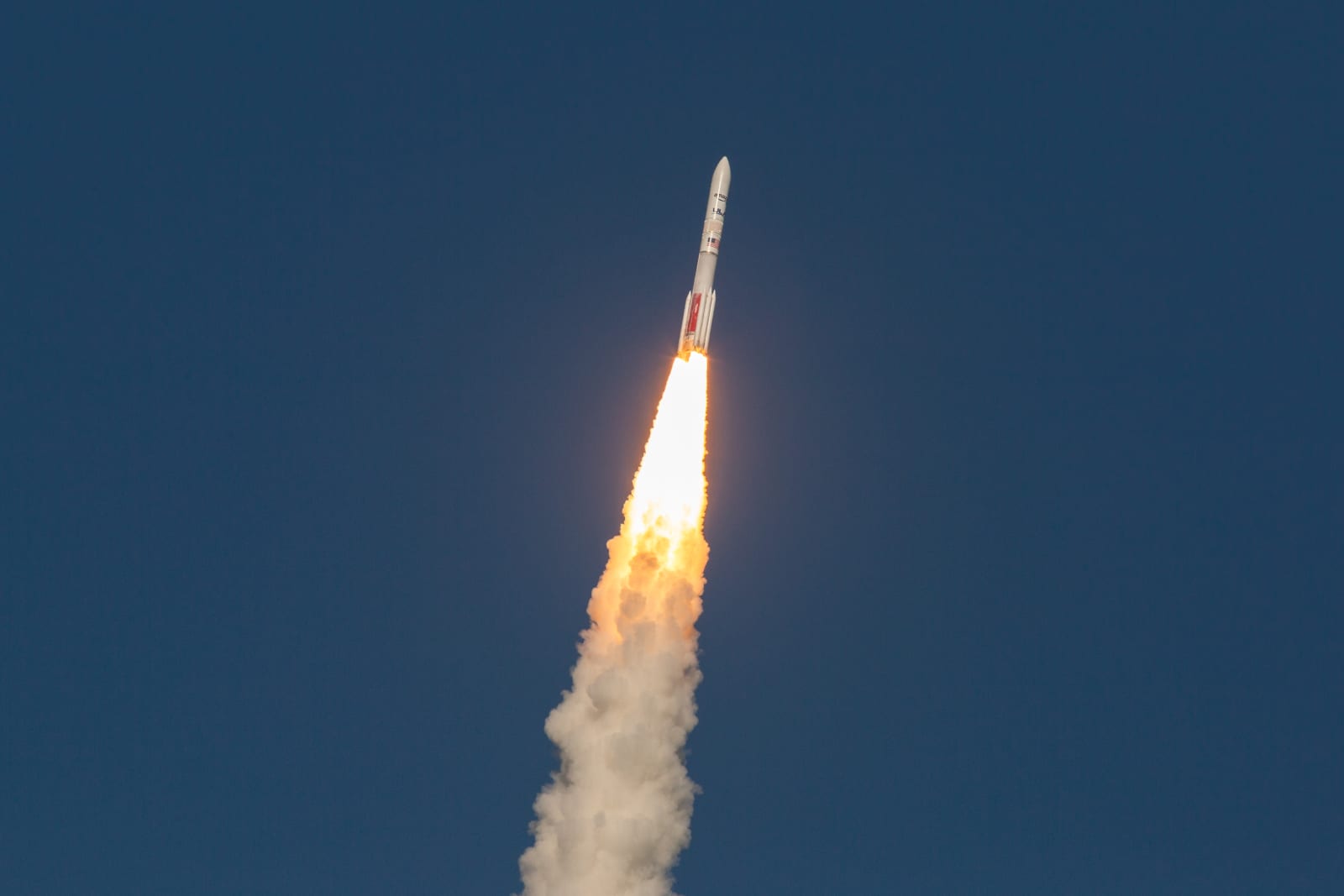
Roman launched Aug. 30 from NASA’s Kennedy Space Center in Florida on a SpaceX Falcon Heavy rocket, beginning a three-month, million-mile trip to its final orbit at the Sun-Earth Lagrange Point 2. During that journey, Roman has undergone a commissioning process where its systems are turned on, adjusted, calibrated, and prepared to conduct science. Roman will use its large field of view and crisp infrared vision to study vast swaths of the sky and probe deeply into cosmic history. In addition to helping scientists explore dark matter, dark energy, and exoplanets, Roman’s surveys will support a broad range of research extending far beyond the mission’s main science goals. The mission also will feature a cutting-edge coronagraph technology demonstration to directly image planets around other stars.
The Nancy Grace Roman Space Telescope is managed at NASA’s Goddard Space Flight Center in Greenbelt, Maryland, with participation by NASA’s Jet Propulsion Laboratory in Southern California; Caltech/IPAC in Pasadena, California; the Space Telescope Science Institute; and a science team comprised of scientists from various research institutions. The primary industrial partners are BAE Systems, Inc.; L3Harris Technologies; and Teledyne Scientific & Imaging.
Stay connected with the mission and share your experience with Roman’s first images on social media. Follow and tag these accounts:
To learn more about the Roman mission, visit:
Alise Fisher Headquarters, Washington 202-617-4977 alise.m.fisher@nasa.gov
Claire Andreoli Goddard Space Flight Center, Greenbelt, Md. 301-286-1940 claire.andreoli@nasa.gov
NASA explores the unknown in air and space, innovates for the benefit of humanity, and inspires the world through discovery.

Loading comments…